


Non-toxic cookware is a hot topic these days – but is it worth the hype? For anyone concerned about chemicals leaching from pots and pans, the answer is yes. The demand for safe, chemical-free cookware has skyrocketed as more people learn about the dangers of traditional nonstick coatings. In this guide, we present the best non-toxic cookware to keep harmful substances out of your food and your kitchen healthy. All our picks are free of PFAS and other so-called “forever chemicals.” These recommendations are based on extensive testing and evaluation by the experts at Expert-pick.com, drawing on over a decade of experience. Let’s dive in!
Ready to transform your kitchen with safe cookware? Our Expert-Pick cookware quiz analyzes your cooking style and recommends the perfect non-toxic options for your needs. Start the quiz now and discover cookware that protects your family’s health while elevating your cooking results!
Non-Toxic Cookware – Real or Hype?
If you’re worried about toxic chemicals like PFAS, PTFE (Teflon), or GenX in your cookware, your concern is justified. These compounds – often called “forever chemicals” – are common in conventional nonstick pans, and they’ve been linked to serious health and environmental issues. This is a big reason why home cooks are turning toward safe cookware alternatives made from materials like ceramic-coated nonstick, stainless steel, carbon steel, cast iron, and pure ceramic.
But before we get into our top picks, it’s important to understand what toxic cookware means, and to cut through some of the marketing jargon out there. You may be surprised to learn, for example, that the chemical introduced to replace banned PFOA in nonstick coatings (we’ll discuss this in a moment) could be even more harmful than its predecessor. Clearly, knowing what to avoid is just as important as knowing what to buy. At Expert-pick.com, our team of experts has been rigorously testing cookware for years, so we can help you make sense of it all.

Here Are the Best Non-Toxic Cookware Picks for the Healthy Home Chef
Below is an overview of our top non-toxic cookware picks for safe and healthy cooking at home (each thoroughly reviewed by our experts). Keep reading for detailed insights on each brand and why we chose them:
- Most Innovative Nonstick: GreenPan GP5 Ceramic Cookware
- Best Nonstick Design: Caraway Home 12-Piece Ceramic Cookware Set
- Safest Ceramic Cookware: Nuwave Healthy Ceramic Non-Stick Coating
- Best Sustainable Cookware Line: Alva Cookware (Ceramic Nonstick & More)
- Best All-in-One Cooking System: Our Place Cookware (Always Pan & Perfect Pot)
- Best High-Tech Upgrade: Our Place Always Pan Pro (Titanium Edition)
- Best American-Made Cookware: Made In (CeramiClad™ Nonstick and Carbon Steel)
- Best Enameled Cast Iron: Staub Enameled Cast Iron Cookware
- Best Stainless Steel Set: Demeyere Atlantis 7-Ply Stainless Steel
- Best Budget Stainless & Cast Iron Blend: IMARKU Stainless Steel & Cast Iron Sets
- Best Classic Enamel Cast Iron: Denby Enamel Cast Iron Cookware
Our top picks cover a range of needs, materials, and cooking styles. All of them are free of PFAS, PFOA, and other toxic substances, and have been vetted by our Expert-pick team for performance and safety.
Now, let’s break down what makes cookware “toxic” or “non-toxic” in the first place, and then we’ll get into the details of each recommended brand.
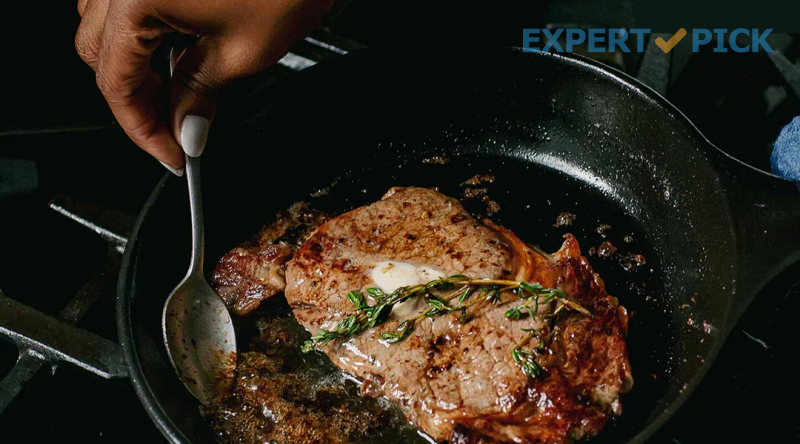
What Is Toxic Cookware?
When people talk about “toxic cookware,” they’re usually referring to pots and pans with traditional nonstick coatings made using a class of man-made chemicals known as PFAS (per- and polyfluoroalkyl substances). There are over 12,000 chemicals in the PFAS family, including PTFE (the polymer in Teflon), PFOA and PFOS (older Teflon ingredients now banned or phased out), and GenX (a newer replacement for PFOA).
PFAS are often called “forever chemicals” because they don’t break down in the environment and can accumulate in our bodies. Research has linked PFAS exposure to cancers, hormonal disruption, liver damage, thyroid disease, infertility, and other health issues. In fact, these chemicals are so pervasive that they’ve been detected in the blood of 99% of Americans, and even in rainwater. That’s a frightening thought – and it’s why you’ll want to avoid cookware that contains any PFAS compounds like PTFE, GenX, etc.
To put it simply: keeping PFAS out of your kitchen is better for your health and the environment. Choosing cookware without these chemicals eliminates one source of exposure. So yes, the “hype” around non-toxic cookware is absolutely warranted.
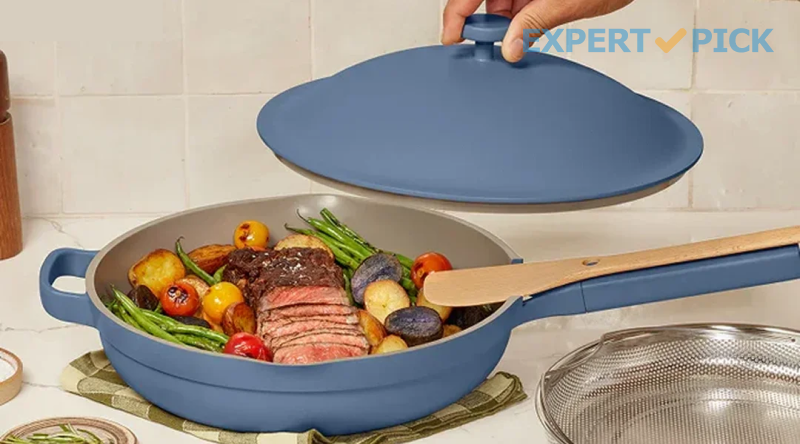
So, What Is Non-Toxic Cookware?
Generally speaking, non-toxic cookware is any cookware made without PFAS-based nonstick coatings. This includes pieces made from inherently safe materials like stainless steel, cast iron (including enamel-coated cast iron), carbon steel, pure ceramic, and modern ceramic-coated nonstick pans (which use a silica-based coating instead of Teflon).
It’s worth noting that even some of these safe materials can have minor considerations. For example, certain metal cookware can leach trace amounts of heavy metals (like a bit of nickel from stainless steel or cadmium in some enamel glazes) under specific conditions. These instances are rare and usually not a concern for most people, but if you have specific metal sensitivities or health conditions, it’s wise to consult your doctor for personalized advice. Overall, cookware that’s free from PFAS chemicals is considered the gold standard for a non-toxic kitchen.
Safest Cookware Materials: Today, the safest choices for cookware are materials made without any PFAS. This includes: stainless steel, cast iron (and enamel-coated cast iron), carbon steel, 100% ceramic cookware, tempered glass (for bakeware), and PFAS-free ceramic-coated nonstick cookware. Each of these materials avoids the toxic risks of traditional Teflon-type coatings while still providing excellent cooking performance when used correctly.
Before we jump into the product reviews, let’s quickly talk about some labeling tricks and terms you should be aware of when shopping for safe cookware.
What You Need to Know About Cookware Labels (PFAS, PTFE, PFOA, GenX – the “Forever Chemicals”)
Cookware companies often use buzzwords and labels like “PFOA-free” or “PTFE-free” to imply their products are safe. But understanding these terms is key, because they can be misleading:
- “PFOA-Free” – This sounds reassuring, but in reality PFOA (one particular toxic Teflon chemical) has been phased out in the U.S. since 2015. Any new pan will be PFOA-free by default, so seeing this label doesn’t guarantee the cookware is free of other harmful PFAS chemicals. It’s essentially the bare minimum standard now.
- Renamed PTFE Coatings – Some brands advertise proprietary names for their nonstick coating to avoid saying “Teflon” or “PTFE.” Don’t be fooled. If a coating isn’t explicitly ceramic-based or PTFE-free, assume it’s a PTFE (fluoropolymer) nonstick. Companies may tout “healthy ceramic” or similar terms—make sure it truly means no PFAS are used.
- PFAS-Free – This is the label you do want to see. It means the cookware has no PFAS chemicals at all (no PTFE, no GenX, etc.). All of our recommended picks are PFAS-free.
To fully avoid the “forever chemicals,” it helps to know the main culprits:
- PFAS – A broad class of over 12,000 fluorinated chemicals used in many industries, including cookware (e.g., Teflon coatings). PFAS chemicals persist in the environment and our bodies for decades. They are associated with health risks even at very low exposure levels. In cookware, PFAS-based coatings provide nonstick properties (e.g., PTFE), but safer alternatives exist.
- PTFE – Short for polytetrafluoroethylene, PTFE is the chemical name for Teflon. It’s a PFAS polymer that gives nonstick pans their slippery surface. PTFE itself is generally stable at normal cooking temperatures, but if overheated (usually above ~500°F), it can release fumes that cause flu-like symptoms (a condition known as “polymer fume fever”) and are deadly to pet birds. Moreover, when a PTFE coating wears down or scratches, the exposed pan material (often aluminum) can leach metals, and flakes of coating can end up in your food. Bottom line: PTFE works well for nonstick, but the potential risks mean we prefer PFAS-free coatings when possible.
- PFOA – Once a key ingredient in making Teflon, PFOA (perfluorooctanoic acid) was used for decades in nonstick cookware manufacturing. It was proven to have serious health hazards and has been largely banned/phased out. No reputable cookware today is made with PFOA. However, as mentioned, “PFOA-free” doesn’t mean all PFAS-free—other PFAS chemicals might still be used.
- GenX – This is the trade name for a newer PFAS chemical introduced by DuPont as a replacement for PFOA in the production of PTFE nonstick. Unfortunately, emerging research indicates GenX may be as harmful as, or even more toxic than, the older PFOA it replaced. Studies from the EPA and environmental groups have linked GenX to potential risks like liver damage, immune system effects, developmental issues, and cancer. In short, switching to GenX was not the safety solution it was touted to be. This is why avoiding all PFAS-based coatings (not just PFOA) is crucial for truly non-toxic cookware.
The upshot on labels: Be wary of nonstick cookware claims. A pan that is truly safe will advertise PFAS-free nonstick or a specific technology like “ceramic nonstick coating.” If you see only “PFOA-free” or a fancy trademarked name for the coating, dig deeper – it likely still contains PTFE or similar chemicals. All of the cookware sets and pans we recommend below are free from PTFE, PFOA, GenX, and other PFAS, so you can cook with peace of mind.
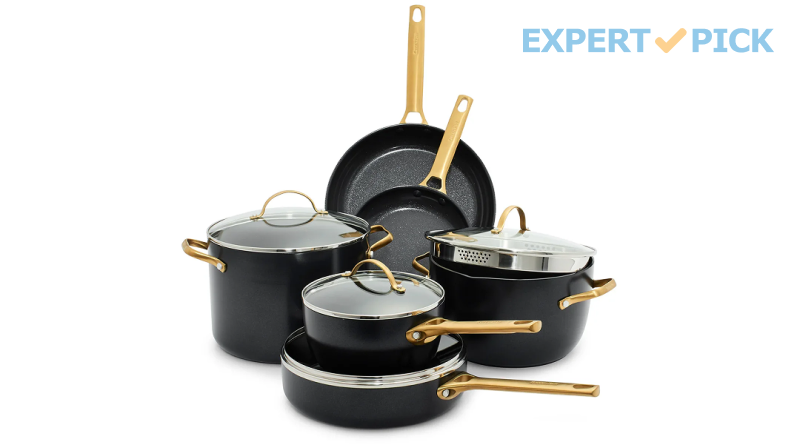
So What’s the Safest Cookware for Your Health?
Let’s face it: most cookware, when used correctly, is generally safe for day-to-day cooking. But if you want to err on the side of caution and eliminate any chance of chemicals leaching or fumes, your best bet is to choose cookware that doesn’t rely on synthetic nonstick coatings. That means using materials like stainless steel, cast iron, carbon steel, pure ceramic, or high-quality ceramic-coated pans which we’ve vetted. These options may require a bit more technique (for example, stainless steel and cast iron aren’t naturally nonstick until you season or preheat them properly), but they offer excellent cooking results without the chemical concerns.
Another tip: Pay attention to care instructions. Even the safest nonstick ceramic coating will last longer and perform better if you avoid high heat and sharp utensils, and hand-wash when possible. Similarly, enamel-coated and pure ceramic pieces will stay safe and chip-free if you handle temperature changes gently (avoid moving them directly from a hot stove into cold water, for instance).
After years of research and testing, we’ve curated a collection of cookware that meets our standards for safety, durability, and performance. These are brands and products we trust for toxin-free cooking. Now, let’s get into the reviews of our top non-toxic cookware picks for 2026!
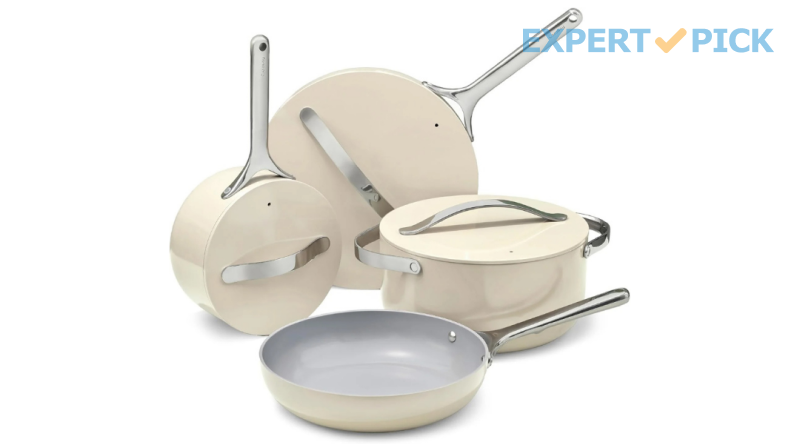
1. Caraway Cookware – Nonstick Ceramic-Coated Cookware
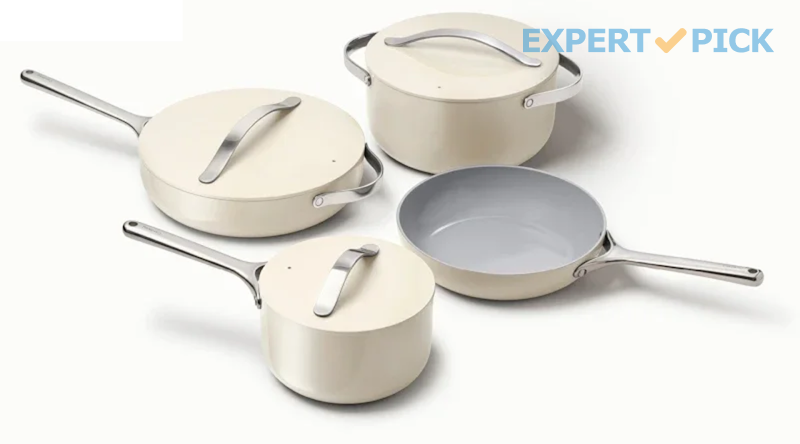
Caraway has quickly become a favorite for home cooks seeking the ease of nonstick pans without the toxic trade-offs. This cookware is as gorgeous as it is functional – I’m especially fond of their Iconics collection, which pairs trendy colors with classy gold-toned handles for a luxe look. Appearances aside, Caraway’s ceramic-coated pots and pans are refreshingly easy to cook with. The slick ceramic surface means you can use minimal oil or butter and still have foods glide out of the pan. (It’s no surprise Caraway’s products often top “best ceramic cookware” lists.)

What Are Caraway Pots and Pans Made Of?
Caraway pans are constructed from a heavy-gauge aluminum core, chosen for its excellent heat conduction and retention. This is one big reason these pans perform so well – they heat up quickly and evenly, with no “hot spots” (a common issue in cheaper nonstick cookware). The cooking surface is a mineral-based ceramic coating derived from silica (sand). It’s applied in multiple layers via a sol-gel process that creates a dense, glass-smooth finish. The result: a nonstick surface that’s completely free of PFAS chemicals (including PFOA and GenX), as well as free of lead, cadmium, or other heavy metals. In fact, Caraway’s cookware is California Prop 65–compliant and tested by third-party labs (SGS and TÜV) to meet EU, FDA, and other food safety standards. In short, the company is very transparent about their materials and safety.
Testing Caraway’s Ceramic Cookware:
I’ve been cooking with Caraway at home for a few years now, and I’ve thrown a bit of everything at these pans. Fried eggs and fluffy omelets? Check. Sautéed vegetables and seared fish? Yup. Simmering tomato sauces and creamy oatmeal? You bet. The pans deliver even heating and a reliably slick release for delicate foods. (One tip: for absolutely perfect over-easy eggs, add a tiny pat of butter or drop of oil to the pan – even though you can go oil-free on ceramic, a little fat helps achieve that truly effortless slide-out.)
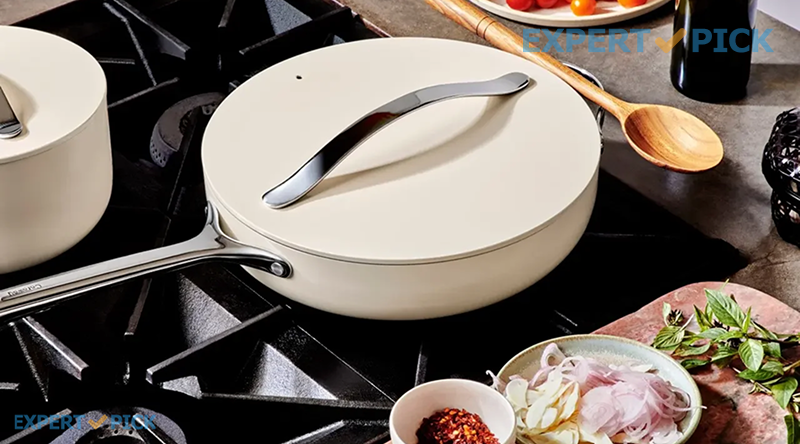
Caraway’s 12-inch sauté pan is one of my go-to pieces; it even includes a “helper handle” opposite the main handle, which is a lifesaver when lifting a heavy pan full of food. That sauté pan is deeper than most, making it ideal for one-pan family meals. I also appreciate that the lids all have a small steam vent – it helps prevent boil-overs when cooking things like rice or pasta. Little design touches like this show Caraway understands practical home cooking.
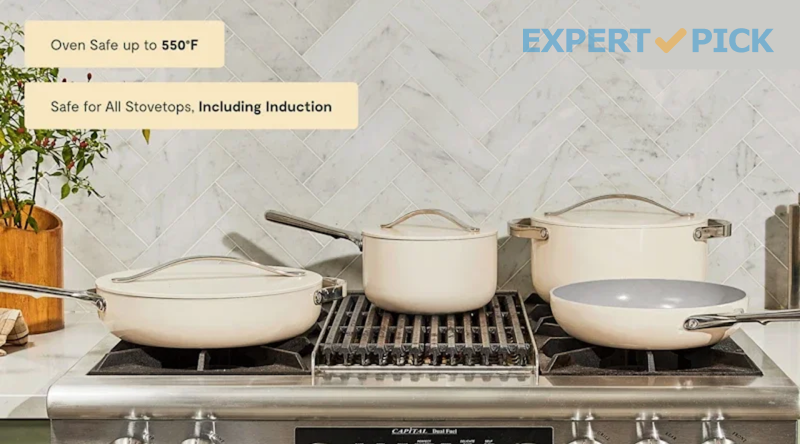
For longevity, a few best practices go a long way: use Caraway pans on medium or low heat (they’re impressively heat-efficient, so you rarely need high heat), avoid metal utensils (wooden or silicone tools will preserve the ceramic coating), and hand-wash them. Caraway advertises the cookware as oven-safe up to 550°F, which is great for finishing dishes in the oven. Just remember the nonstick coating – like any – will degrade faster if exposed to very high heat frequently.
The Clean-Up:
Caraway pans are a breeze to clean. The nonstick surface releases food so well that often I can simply wipe out the pan with a soapy sponge and rinse. On the rare occasions when I’ve burned something (yes, it happens to the best of us – looking at you, over-reduced pan sauce and forgotten grilled cheese), a brief soak with warm soapy water or a swipe with a gentle brush has been enough to remove any residue. I’ve found no need for abrasive scrubbers (avoiding those will help protect the coating). Importantly, these pans are not dishwasher-safe – but honestly, they’re so easy to hand wash, it’s no inconvenience.
Stovetop Compatibility:
Caraway’s cookware has a stainless steel plate bonded to the bottom, which makes it compatible with all cooktops: gas, electric, and even induction. I use mine on a gas range, but friends with induction cooktops report that Caraway pans work beautifully on induction as well. They also heat evenly on ceramic glass stovetops, thanks to that flat steel base.
Longevity & Durability:
No nonstick pan lasts forever, but Caraway’s build quality gives it a longer life than most ceramic competitors. I treat mine with reasonable care – no metal utensils, no shocking a hot pan under cold water – and I’ve gotten years of use without significant loss of nonstick performance. (For context, I have two Caraway sets that are each going on 3+ years, and they’re still frying eggs without sticking.) The thick aluminum core and quality coating help these pans resist warping or scratching. That said, remember that even the best ceramic nonstick will eventually show wear. Expect to enjoy Caraway for many good years, and know that when the time does come to replace, the pans are PFOA- and PFAS-free, so you’re not leaching toxic forever chemicals as the coating ages.
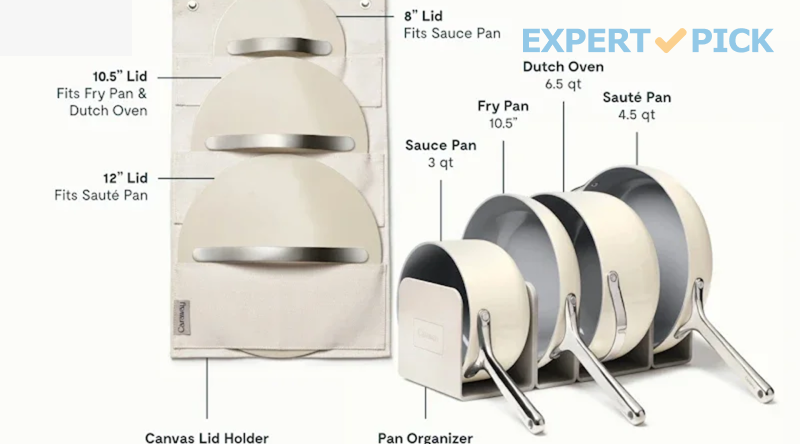
What You Get in a Caraway Set:
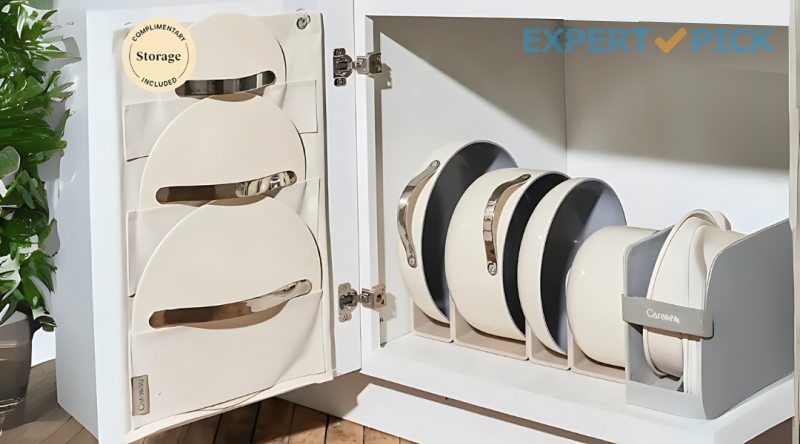
A standard Caraway cookware set includes four essential pots and pans with their matching lids: a 10.5-inch frying pan, a 3-quart lidded saucepan, a 4.5-quart lidded sauté pan (the one with the handy helper handle), and a 6.5-quart Dutch oven with lid. (Many sets from other brands don’t include a true Dutch oven, so that’s a great bonus here.) Caraway also shines in the accessories department: every set comes with a modular storage solution – magnetic pan racks to neatly store each pan, and a canvas lid holder that you can mount inside a cabinet door to corral the lids. It’s a thoughtful inclusion that keeps your kitchen organized (goodbye, cluttered lid drawer!).
Caraway offers additional pieces and sets as well. If the full set is more than you need, you can purchase pieces à la carte – say, just a frying pan or the Dutch oven – to test the waters. They even have a Minis Duo (an 8-inch mini fry pan and an 1.75-quart mini sauce pan) which is perfect for small kitchens, dorms, or quick single-serve tasks like frying an egg or heating a sauce. For those wanting the ultimate Caraway collection, there’s a Deluxe Set that bundles the standard 4-piece set with the Mini Duo (a total of 7 pots/pans + 4 lids) at a discounted package price.
Pros:
- Ceramic-coated nonstick surface (food releases easily)
- Completely free of PFAS (no PTFE, PFOA, GenX), and no lead or cadmium
- California Prop 65 certified; rigorous third-party safety testing
- Heavy aluminum core heats quickly and evenly
- Oven safe up to 550°F
- Works on all stovetops (induction, gas, electric)
- Clever storage organizers included with set
- Very easy to clean by hand
Cons:
- Not dishwasher safe (hand-wash only)
- Not safe for metal utensils (use wood or silicone)
- Like all nonstick, the coating won’t last a lifetime (expect to replace after several years of heavy use)
What’s Included (Caraway 7-Piece Set):
- 10.5-inch Fry Pan
- 3-quart Sauce Pan with lid
- 4.5-quart Sauté Pan with lid (with helper handle)
- 6.5-quart Dutch Oven with lid
- Magnetic Pan Rack (4 dividers)
- Canvas Lid Storage Holder (fits inside cabinet door)
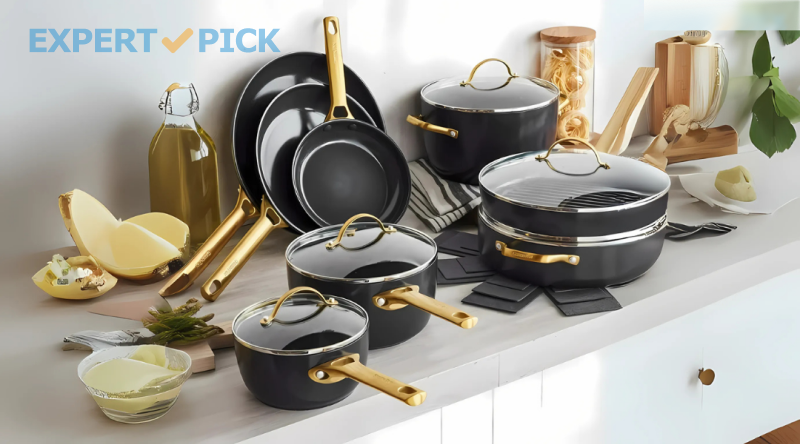
2. GreenPan – Thermolon™ Ceramic-Coated Nonstick Cookware
GreenPan is one of the pioneers of PFAS-free nonstick cookware. In 2007, GreenPan introduced the world’s first ceramic nonstick coating (Thermolon), offering an alternative to traditional Teflon. Over the past 17+ years, they’ve continually innovated on that technology, and it shows – GreenPan’s higher-end lines are among the most durable ceramic nonstick pans you can buy. If you’re looking for a non-toxic nonstick that can handle daily use, GreenPan should be on your short list.
Every GreenPan piece features the proprietary Thermolon ceramic coating, derived from sand and applied in a high-heat curing process. Importantly, Thermolon contains no plastics or PFAS (no PTFE, PFOA, etc.), no lead or cadmium. It will never release toxic fumes, even if you accidentally overheat it – a key reassurance for those of us who’ve forgotten a pan on the burner before! GreenPan also walks the talk on manufacturing: their curing process emits 60% less CO₂ than traditional nonstick coatings, and they utilize recycled aluminum and even have a take-back program for old pans.

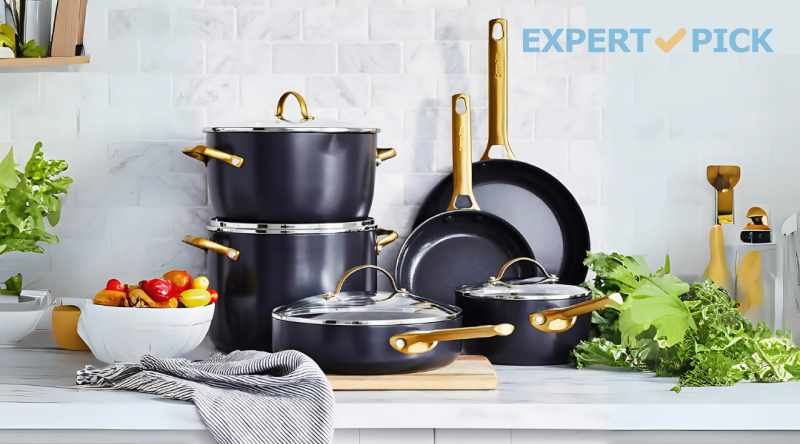
GreenPan’s Latest Innovation – The GP5 Collection
GreenPan has a wide range of lines, but the GP5 is a true standout and my personal favorite. This line (launched to mark GreenPan’s 15th anniversary) represents their most advanced ceramic nonstick technology to date. The Infinite8™ coating on GP5 pans is a remarkable 8-layer ceramic finish infused with diamonds for extra hardness. The cookware bodies are hard-anodized for strength and are designed to resist warping.
In use, the GP5 pans have a noticeably slick surface (even among GreenPan’s other products) and can tolerate the wear and tear of real life: they are more resistant to scratches, can handle occasional metal utensil use, and even survive the dishwasher (though I still hand-wash mine to maximize life). I have the GP5 frypans in rotation at home, and they’re workhorses. The heat distribution is fast and even, thanks to a thick base that also stays perfectly flat (GreenPan engineered the base to counteract the slight bulging that can happen when pans heat up). This means your oil stays evenly distributed rather than pooling to the edges. The GP5 collection comes in a sleek black finish, or you can opt for a stylish stainless steel exterior version with champagne-gold handles if you want a bit of shine.
My Experience with GreenPan
I’ve been using GreenPan cookware for over a decade, and I’ve tested many of their collections – from the entry-level to the top-tier. The difference largely comes down to longevity. The cheaper lines are great initially but might last a year or two; the premium lines (like GP5, Venice Pro, Valencia Pro) can keep going strong much longer.
For example, the Valencia Pro (anodized aluminum with a tough ceramic coating) has won awards for durability, and I can see why. It held up admirably in my kitchen. GreenPan even introduced a stainless-steel exterior version of the Valencia Pro, blending aesthetics with performance. The GP5, however, takes the crown for performance. I’ve fried eggs with no oil just to push it – they slid around like air hockey pucks. I’ve seared fish, stir-fried veggies, toasted oatmeal (and yes, burned some oatmeal), and the GP5 laughed it off. One time I badly burned a pot of oats, thought I’d ruined the pan, but once cooled, the charred bits lifted out effortlessly with a gentle scrape of a wooden spoon.
After a quick soapy wash, the pan looked good as new – no staining or damage to the ceramic. That was the moment I became truly impressed. While GreenPan says many of their pans are dishwasher-safe, I always recommend hand-washing ceramic nonstick to extend its life. It’s so easy to clean anyway. And although the GP5 coating is advertised as metal-utensil safe (those diamond particles add toughness), I still avoid metal tools to prevent any chance of scratching. Treat these pans with care and they will reward you with a longer lifespan.
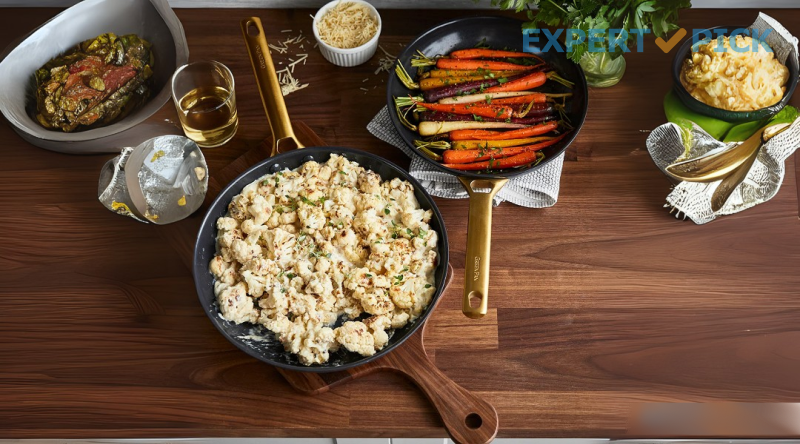
Longevity & Durability
As noted, GreenPan’s top lines are the most durable ceramic nonstick I’ve encountered. My GP5 pans still look nearly new after months of daily use – which is saying something for ceramic. By nature, ceramic coatings don’t last as long as PTFE ones, but GreenPan has narrowed that gap. It’s important to set realistic expectations: no nonstick pan lasts forever. But if you get a few solid years out of a ceramic pan that you use constantly, that’s a win in my book. GreenPan’s build quality (sturdy anodized bodies, quality handles, etc.) means the pan itself will last; the question is just how long the coating remains nonstick. With proper use (moderate heat, gentle utensils, careful cleaning), you should enjoy these pans for several years before performance diminishes.
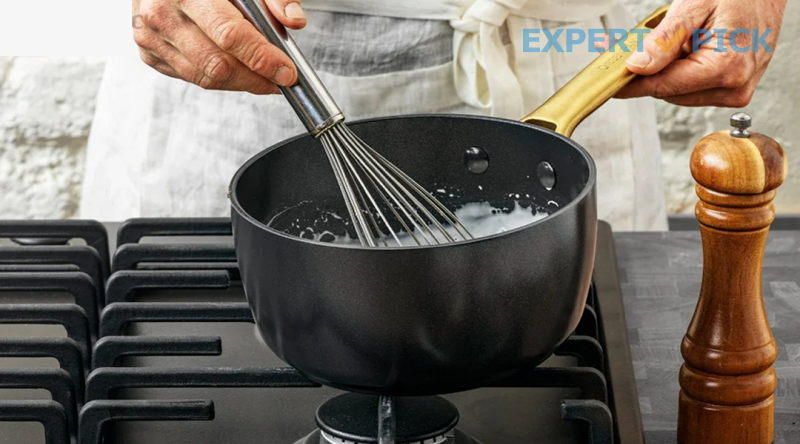
The GreenPan Clean-Up
Much like Caraway, GreenPan ceramic pans are a cinch to clean. I usually just hand wash with a soft sponge. Foods generally don’t stick, so cleanup is often just a matter of wiping out oil residue. In cases of accidental burning, I’ve found a short soak and a nylon scrubber does the trick. The interior of GP5 is a grey/black color, which is nice because it doesn’t show staining the way older white ceramic pans did.
Pros:
- Industry leader in non-toxic nonstick innovation (original inventor of ceramic coating)
- Thermolon™ ceramic coating is highly durable, especially in GP5/Valencia lines
- Absolutely no PFAS (PTFE, PFOA) or other toxic materials in the coating
- Oven safe to 600°F (most ceramic pans are only safe to ~450°F)
- Excellent heat conduction and a stay-flat base (even heating, no warping)
- Many lines are tolerant of metal utensils and dishwasher use (GP5 in particular)
- Induction compatible (most collections have a magnetized base)
- Some sets include nice extras (e.g. the GP5 set comes with silicone utensils and felt pan protectors)
- GreenPan has a recycling program for old pans, reflecting their eco-conscious ethos
Cons:
- Like all nonstick cookware, it won’t last forever – expect to replace after some years (especially if heavily used)
- Higher-end GreenPan sets can be an investment (though worth it for the quality, in my opinion)
What’s Included in a GreenPan GP5 Set: A typical GP5 Infinite8 11-piece set includes: a 9.5-inch frypan, an 11-inch frypan, a 3-quart saucepan with lid, a 3-quart sauté pan with lid, a 5-quart stockpot with lid, plus three pan protectors and three quality silicone utensils. (I love that they include the pan protectors for stacking and utensils that are safe for the surface.) One thing to note: the stockpot is a great addition – many cookware sets only give you a smallish Dutch oven, but a full 5-qt stockpot is super useful for soups and pasta.
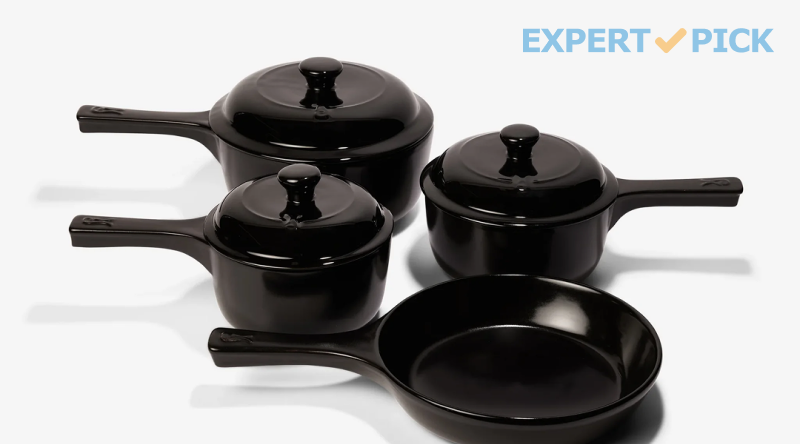
3. Nuwave – Duralon Blue Ceramic Non-Stick Cookware (No PFAS, Lightweight, Affordable)
If you’re looking for a non-toxic cookware set that’s lightweight, budget-friendly, and PTFE-free, the Nuwave Duralon Blue collection is worth considering. This 12-piece non-stick cookware set is designed with a ceramic-based coating that’s completely free from PFAS, PTFE, PFOA, lead, and cadmium — all the usual suspects when it comes to toxic cookware concerns.
Nuwave uses what they call “Duralon® Blue” — a proprietary ceramic non-stick coating that is bonded to a durable aluminum base, giving you even heating with less sticking and easier cleanup than traditional pans. Unlike some ceramic coatings that degrade quickly or contain hidden chemicals, Nuwave explicitly markets this collection as a next-generation eco-friendly option that maintains performance over time.
The aluminum base keeps the pans lightweight and quick-heating — a good choice for everyday cooking like stir-fries, eggs, and pasta sauces. The glass lids are tempered, vented, and oven-safe up to 350°F, while the cookware itself is oven-safe up to 500°F. It’s also induction-compatible, which is a big plus for users with newer cooktops.

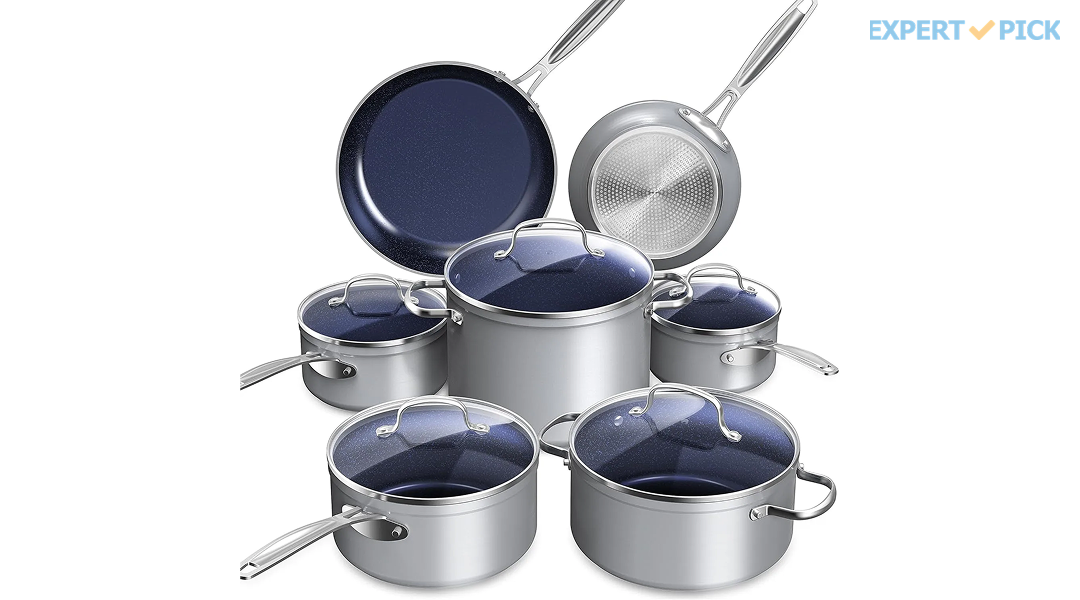
Why It Stands Out
What makes the Duralon Blue set compelling is that it offers ceramic nonstick at a very accessible price point, without sacrificing safety. Each piece is manufactured without any forever chemicals or heavy metals. While the ceramic coating will naturally degrade faster than stainless steel or cast iron, Nuwave backs the set with a 1-year warranty and highlights that the coating resists scratching and heat damage longer than older ceramic styles.
The collection includes:
- 2 stainless steel utensils
- 1.5 qt saucepan with lid
- 2 qt saucepan with lid
- 5 qt stockpot with lid
- 8-inch fry pan
- 9-inch fry pan
- 11-inch deep sauté pan with lid
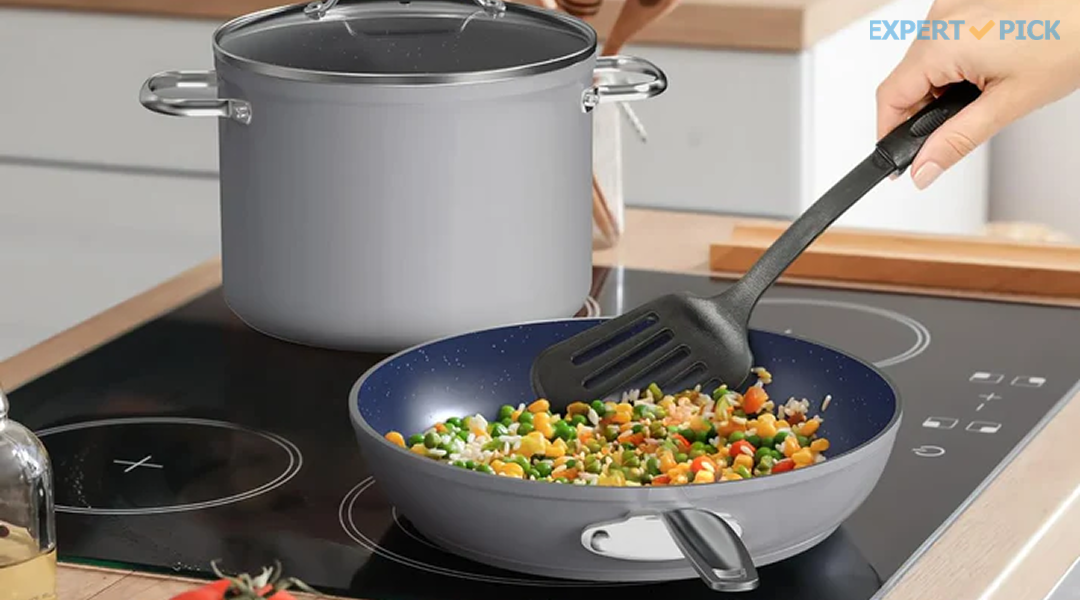
Expert Insights from the Editors at Expert-pick
We found this set to be a great “first step” into non-toxic cooking for home chefs who are transitioning away from PTFE/Teflon pans. It’s especially ideal for small households, student apartments, or cooks who want a safer alternative without the weight or price of premium ceramic or cast iron.
The handles stay cool, the pans clean up easily with a soft sponge, and the blue color is vibrant and fun — a rare combo in the world of chemically safe cookware. While it’s not meant to last decades like fully clad stainless or 100% ceramic, it fills a valuable niche: cleaner, safer everyday cookware that won’t break the bank.
Pros:
- Duralon® Blue ceramic nonstick coating – no PFAS, PTFE, or PFOA
- Free from lead, cadmium, and other heavy metals
- Compatible with all stovetops, including induction
- Oven-safe up to 500°F (lids to 350°F)
- Lightweight and quick-heating
- Easy to clean, stain-resistant interior
- Affordable price point
Cons:
- Ceramic coating will degrade faster than traditional stainless or cast iron
- Not dishwasher-safe (hand washing recommended to preserve coating)
- Not designed for metal utensils (use silicone or wood)
- 1-year limited warranty is shorter than some competitors
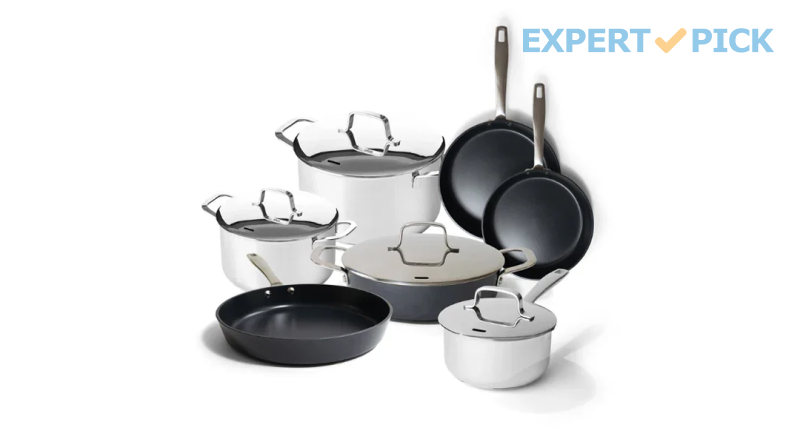
4. Alva Cookware – Sustainable Nonstick & Stainless Cookware (Mix-and-Match Sets)
Alva is a heritage European cookware brand (family-run since 1949 in Belgium) that might be new to American cooks, as they expanded to the U.S. only recently. I added Alva to our best cookware guide in 2024 because I was impressed by their combination of quality, sustainability, and variety. Alva offers a full range of cookware materials – from ceramic-coated aluminum pans to multi-ply stainless steel, cast iron, and carbon steel. It’s like a one-stop shop for building a custom set that suits your cooking style.
For the fast track to healthier cooking, take our personalized Expert-Pick quiz to find the best non-toxic pots and pans for your kitchen. It’s quick, easy, and tailored to help you cook with confidence!
The brand’s history is pretty cool: Alva was started by Albert Vandaele, who began crafting aluminum pans from recycled scrap metal after WWII. Today, the third generation of the family continues the tradition, emphasizing recycled materials and durable construction.
Alva Cookware Tested: I got my hands on pieces from Alva’s Maestro line, which is their top tier. Specifically, I tested the 11-inch Maestro Ceramic Nonstick Frying Pan and the 11-inch Maestro 5-Ply Stainless Steel Frying Pan. They also offer the Maestro line in cast iron and carbon steel, but I focused on the nonstick and stainless combo (since that covers most daily needs).
If you’re indecisive between nonstick and stainless, Alva actually sells a Maestro 7-Piece Essentials Set that includes both types: a ceramic-coated skillet and a stainless steel skillet, plus a stainless saucepan, stockpot, and lids. It’s a neat mixed set that gives you the best of both worlds.

Now, on to performance:
- Maestro Ceramic Nonstick Pan: This is a classic aluminum-core pan with a ceramic nonstick coating (PFAS-free, of course). It has some thoughtful design perks: straight sides (which Alva notes give ~20% more cooking surface area compared to flared pans – great for searing more food at once) and a thick tri-layer base that includes stainless steel for induction compatibility. In my use, this pan did exactly what a good nonstick should – fried eggs slid out effortlessly, and even delicate fish fillets turned and released without tearing. Sautéing vegetables required minimal oil. The pan has a substantial feel (it’s not flimsy light aluminum; that steel base adds weight and stability). The ceramic coating has a pale champagne color, and after weeks of cooking, it didn’t stain or scratch. I really appreciate the extended stainless handle: it stays fairly cool and has a comfortable grip.
- Maestro 5-Ply Stainless Steel Pan: Alva’s stainless pans are beautiful – brushed finish, straight sides matching the nonstick’s silhouette, and a gleaming stainless interior. The construction is 5 layers (18/10 stainless inside and out, with aluminum core layers for even heating). It is a bit heavier than an aluminum pan of the same size (that’s normal for multi-ply steel), but not unmanageable. And the 11-inch size I tested comes with a small helper handle, which is extremely handy when maneuvering a fully loaded pan.
- I used this for tasks like searing chicken breasts, making one-pan pasta dishes, and getting a hard sear on halibut. It heats very evenly and holds heat well, akin to other high-end cladded pans I own. There were no hot spots – pancakes browned uniformly across the surface. The straight sides really do provide extra real estate; I noticed I could fit a bit more food in a single layer than in my other 11-inch pans with sloped sides. The handle design deserves praise too: it’s welded (no rivets, yay for easier cleaning) and it’s ergonomically shaped – kind of a rounded V shape that fits nicely in the hand without cutting in.
How to Achieve Nonstick on Stainless: This is a common question, and I followed my usual routine: preheat the empty stainless pan on medium for a minute or two, then add a high-heat oil and let that heat until shimmering, then add food. Using this method, I had eggs frying in the Alva stainless pan without sticking (though I’ll admit, for eggs I still typically reach for ceramic or cast iron). For meats and veggies, proper preheat and oiling yielded a great sear and minimal sticking – plus all those tasty browned bits (fond) that stainless is perfect for, which you can deglaze into a sauce.
Cleanup: Both the Alva nonstick and stainless pans cleaned up easily. The ceramic nonstick was just a quick wipe and rinse in most cases. The stainless pan, thanks to that Silvinox-like treatment they do (I suspect – it stayed pretty silvery), didn’t discolor much. After searing meat, a bit of Bar Keepers Friend or a stainless cleanser brought it back to pristine if there was any slight browning. One thing I love: because the stainless pan has no rivets inside (the handles are welded externally), there were no pesky rivet stains or gunk traps to scrub around. That’s a small detail but anyone who cleans pans daily knows it matters.
I hand-washed these pans, as I do with all my good cookware. Alva says their ceramic nonstick is not dishwasher safe (which is typical), and the stainless is dishwasher-safe but you’ll prolong its beauty by hand-washing.
Durability: Alva really stands by their quality: they offer a 10-year warranty on the ceramic nonstick, which is almost unheard of (most nonstick warranties are 1 year, maybe 2-5 at best). That gave me a lot of confidence in their coating longevity. The 5-ply stainless has a 25-year warranty, essentially covering any manufacturing defects or abnormal warping. These are pans built to last – I expect the stainless ones especially to be something you keep for a lifetime if well cared for. The ceramic will eventually need replacing (as all do), but a decade warranty suggests you’ll get a lot of cooking out of it.
Pros:
- PFAS-free ceramic nonstick coating (safe and non-toxic)
- Cookware is third-party tested for safety (no lead or cadmium)
- Excellent build quality: heavy bases that heat evenly and resist warping
- ~20% more usable cooking surface due to straight-side design
- Heats up quickly and retains heat well (especially the stainless 5-ply)
- Oven safe up to 392°F (200°C) for ceramic-coated pans; higher for full metal pans
- Induction-compatible (all Maestro pieces have stainless steel in the base)
- Long warranties (10 years on nonstick coating, 25 years on stainless) show the brand’s confidence
- Easy to clean; welded handles mean no interior rivets on many pieces
- You can mix and match pieces or get combined material sets – very versatile offerings
Cons:
- Not dishwasher safe for the nonstick pieces (hand wash recommended)
- Being a premium brand, the price is on the higher side (though you’re paying for multi-generation durability)
What’s Included (Maestro 7-Piece Mixed Set):
- 11-inch Maestro Nonstick Frying Pan (ceramic-coated aluminum)
- 3.5-quart Maestro Nonstick Deep Skillet with lid (great all-purpose pan)
- 2-quart Maestro Stainless Saucepan with lid
- 8-quart Maestro Stainless Stockpot with lid
This set basically covers all bases: you get two PFAS-free nonstick pans for eggs, sautéing and searing (one frypan, one deeper pan), plus stainless steel pots for boiling, sauces, soups, etc. I love the concept of a mixed set like this because it acknowledges that different tasks benefit from different materials.
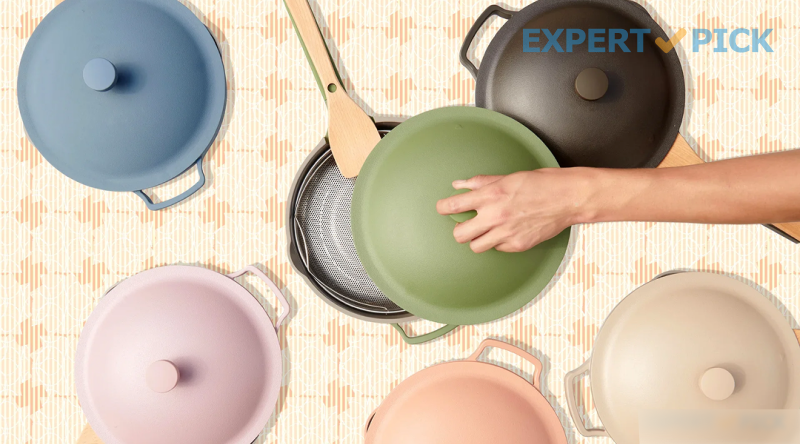
5. Our Place – Mission-Driven, Sustainable Cookware System
Our Place has made a big splash in the cookware world in recent years, largely thanks to the Instagram-famous Always Pan. But beyond the hype, what drew me to test Our Place is their mission of inclusivity and sustainability in cooking. The company was founded by immigrants who wanted to create cookware that brings people together and simplifies home cooking. The result is a line of aesthetically beautiful, multi-functional pieces that aim to replace clutter with a few do-it-all tools.
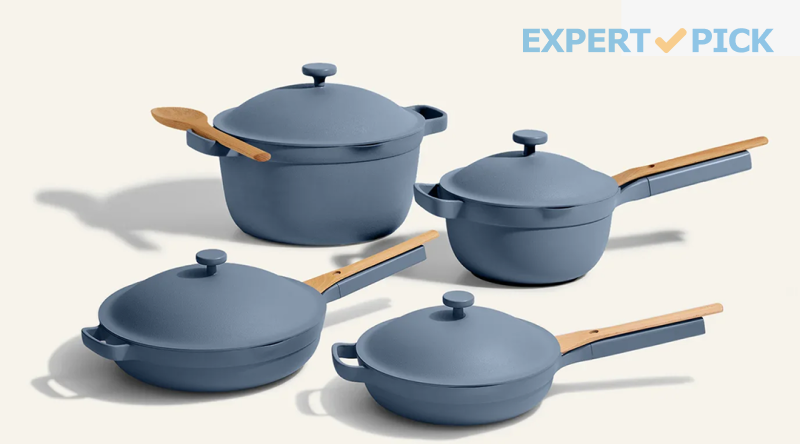
Our Place’s core offerings are the Always Pan 2.0 and the Perfect Pot, which they also bundle as a set (often simply called the “Always Pan Set” or the “Home Cook Duo” if just those two). In late 2024, they upgraded both the pan and pot to “2.0” versions with better coating and design tweaks, and introduced mini versions of each for smaller jobs. They also launched an intriguing cast aluminum Always Pan Pro (Titanium) which I’ll touch on in a moment.

What Are Our Place Pans Made Of?
The Always Pan and Perfect Pot are made from recycled aluminum (100% post-consumer, which is great from a sustainability perspective). Aluminum is fantastic for quick, even heating – these pans heat up fast and respond quickly when you adjust the burner, which I found convenient for dishes that require temperature control. The downside of aluminum’s quick heating is that it also cools quickly and doesn’t retain heat like cast iron or thick steel – meaning these pans won’t keep food warm for long off the stove. But for sautéing, frying, boiling, they’re champs. The aluminum also keeps them lightweight, so they are very easy to handle (a big plus if you find cast iron Dutch ovens or stainless pans too heavy to lug around).
The cooking surface is a proprietary Thermakind® ceramic nonstick coating that is primarily derived from sand and water. It’s completely PFAS-free (no PTFE, PFOA, etc.) and also free of lead or cadmium. Our Place says this new coating lasts 50% longer than their original (which, admittedly, had some mixed reviews on longevity). The nonstick coating fully coats the interior, so your food never touches the aluminum base metal. I appreciate that extra precaution, as it prevents any aluminum leaching concerns (anodized aluminum is generally safe, but raw aluminum can react with acidic foods).
One thing to note: the main handles on the Always Pan 2.0 and its mini version are stainless steel (with a silicone wrap on the minis), which helps them stay cooler on the stovetop. The Perfect Pot’s long handle and the small loop “helper” handles on both pieces are aluminum, so those will get hot during cooking. Definitely use a pot holder when grabbing the side handles or pot handle. Essentially, they optimized the pan handle for comfort, but the pot needed an aluminum handle to be oven-safe and seamless in design.
Cooking with the Always Pan and Perfect Pot
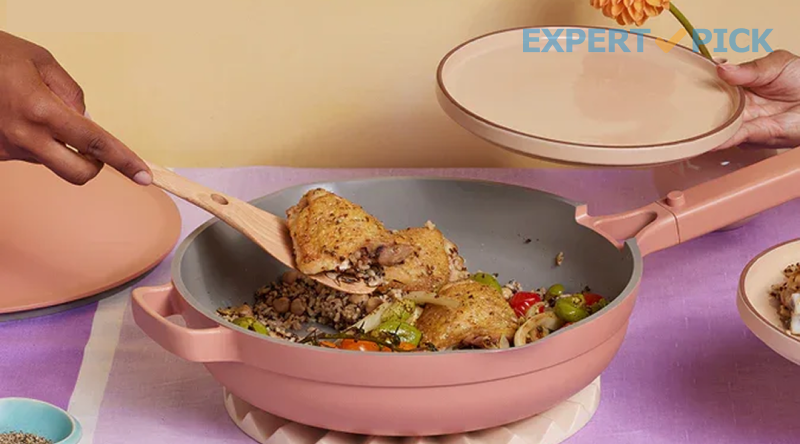
I’ve been using the Our Place cookware set (Always Pan 2.0 + Perfect Pot + the two minis) for a few months. Aesthetically, they are gorgeous. I chose the Spice color (a muted terracotta) and I actually leave them out on my stove because they’re that pretty. Looks aside, I approached them with a healthy skepticism given the intense marketing – but I’ve been pleasantly surprised with their functionality.
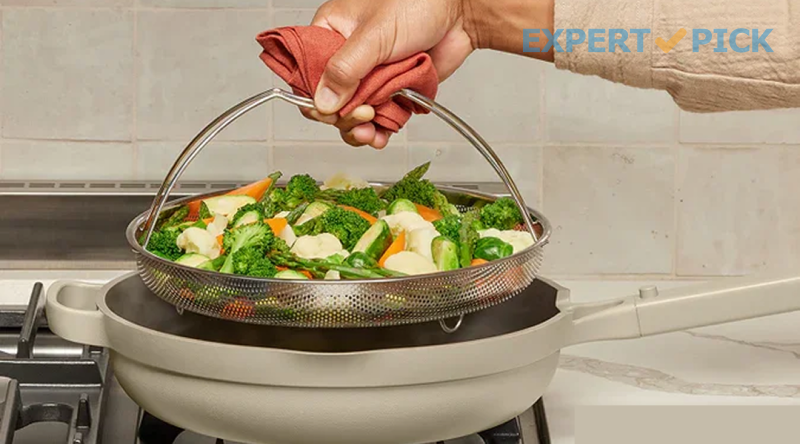
The Always Pan 2.0 really can handle most cooking tasks: I’ve done everything from stir-frying and searing thin steaks to making grilled cheese, simmering curries, and steaming dumplings (using the included stainless steamer basket). The pan has a broad, flat bottom for a 10-inch diameter pan, and moderately tall sides for a skillet, making it versatile. It heats up fast (almost like turning on an electric griddle – quick heat transfer). I was wary of hot spots given the wide surface and aluminum build, but I haven’t noticed uneven cooking; pancakes and crepes come out evenly browned.
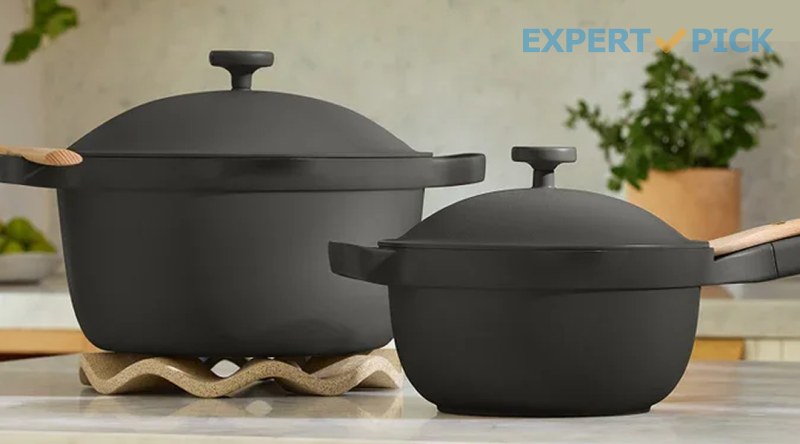
The Perfect Pot is a lightweight 5.5-quart pot that can go from stovetop to oven (up to 450°F with lid, as they caution no broiling). I’ve used it for boiling pasta, making soup, baking bread (yes, I baked a loaf in it – came out with a nice crust!), and even deep-frying once.
It performs similarly to a standard aluminum Dutch oven but is much lighter than my enameled cast iron one. The pot’s lid cleverly has a built-in strainer on one side, so you can pour out water without a colander – super handy for pasta or potatoes.
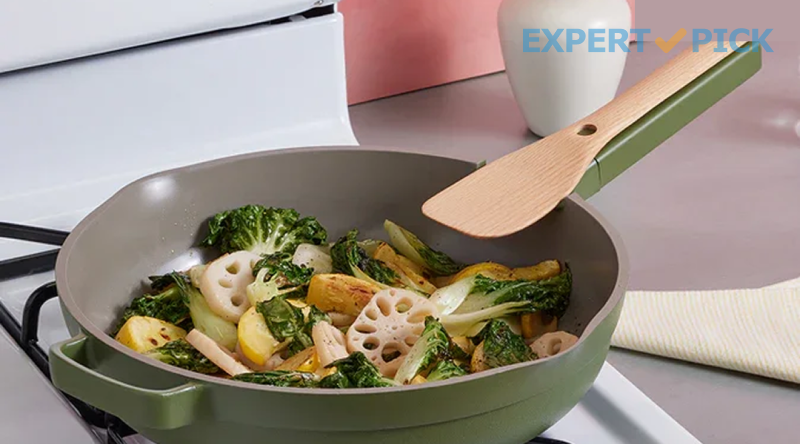
The lid knob also doubles as a spoon rest, which is a thoughtful touch (no more drip-covered countertop). Both pieces have neat pour spouts on both sides, which I found useful for transferring soups and sauces without mess. And each Always Pan comes with a custom beechwood spatula that cleverly nests on the pan’s handle – a signature design that encourages you to keep the spoon handy. (The set actually includes two spatulas and two spoons, for big and mini versions.)
Limitations
No cookware is truly “all in one.” The Always Pan is not great for deep frying large batches (it’s wide but not super deep), nor is it ideal for slow braises or heat retention (for example, it won’t keep a stew warm for an hour off-heat like a cast iron dutch oven could). The Perfect Pot, while oven-safe to 450°F, can’t replace a cast iron dutch oven for no-knead bread if you need the 500°F+ heat. And neither will give you a hard steel-like sear on a thick steak the way cast iron or carbon steel can. I consider them excellent generalists – wonderful for everyday weeknight cooking and gorgeous for serving – but a serious hobbyist cook might still want to supplement with a cast iron skillet or a high-end stainless/clad pan for specific tasks.
Caring for Our Place Cookware
To make that nonstick last, treat it gently. That means always hand washing (which is easy – the coating releases food readily, so I never had to scrub hard). Use only wooden or silicone utensils (no metal scratching that coating!). Avoid aerosol cooking sprays (they can leave residues). And as always with nonstick, cook on medium or low heat rather than high whenever possible – high heat can degrade coatings faster. Our Place’s manual also says avoid stacking them, or if you do, use a soft buffer (they provide cork trivets in some packages for this purpose). So far, my Always Pan 2.0 shows no signs of surface wear. That’s in line with their claim of improved durability. I’ll keep an eye on it over the long term, but so far, so good.
Stovetop Compatibility
Thanks to a steel plate fused to the bottom, all Our Place cookware works on induction burners as well as gas and electric. I tested the pan on an induction plate and it heated up nicely. Remember, though, these have aluminum bodies, so they heat up faster on induction than a thick cast iron would (be mindful not to overshoot your heat level). All pieces are also oven-safe up to 450°F (which covers most baking, though as noted, not suitable for broil or extremely high-temp roasting).
Longevity & Durability
It’s early for me to judge the multi-year lifespan, but the improvements in the 2.0 line (new coating formula, upgraded materials) give me optimism that these will outlast the first-gen Always Pan (some of which had issues with the nonstick wearing out within a year). The fact that they emphasize durability now – claiming 50% longer life – indicates they know it needed to be better, and they addressed it. I will say, if you use these as intended (for everyday home cooking, not for ultra high-heat pro chef tricks) and care for them, you should get several good years from them.
The Cleanup
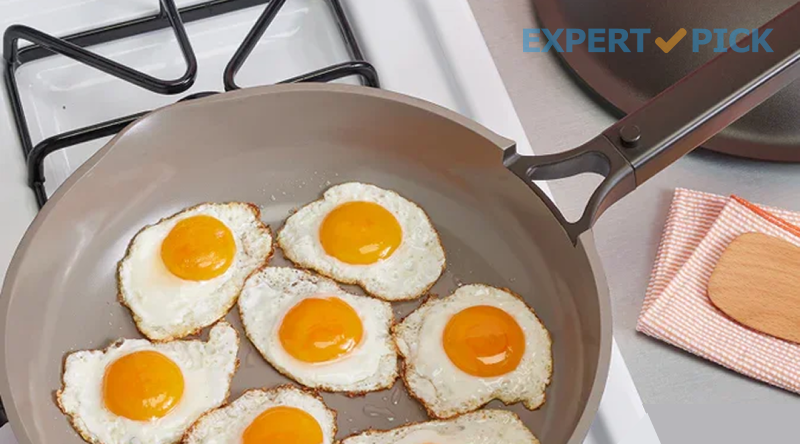
I can vouch that cleaning these pans is a snap. After cooking, a quick wash with a sponge and dish soap is usually enough. Everything I’ve cooked has wiped right out – even sticky teriyaki sauce and melted cheese from a quesadilla. There’s something so nice about not having to scrub a pot after dinner. Just remember to avoid abrasive cleaners or scouring pads, as they can scratch the coating.
Pros:
- Fast and even heating (recycled aluminum core heats up quickly and uniformly)
- Lightweight and easy to handle (anyone can lift these, even when full)
- Beautiful design – looks great on the stove and doubles as serveware
- Smart features: built-in spouts, strainer lid, spoon rest, nesting spatula
- Thermakind® ceramic nonstick is PFAS-free (no PTFE, PFOA), and free of lead/cadmium
- Very easy to clean (food slides off, simple hand-wash)
- Stovetop agnostic: works on induction, gas, electric
- Oven-safe (up to 450°F) for versatile cooking
- Space-saving: the Perfect Pot replaces several items (dutch oven, stockpot, etc.)
- Mission-driven brand with focus on sustainability and community
Cons:
- As with all nonstick, it won’t last a lifetime – the coating will eventually wear (Our Place has improved it, but it’s still not eternal)
- Not dishwasher-safe (hand wash only)
- The aluminum side handles can get very hot – always use oven mitts
- Not metal utensil-safe (use wood or silicone to avoid scratches)
- Quick to cool down – not ideal for keeping food warm or for slow, long simmers (use cast iron or enameled iron for heat retention)
What’s Included in the Our Place Cookware Set: The full set (often simply called the “Always Pan Set” on their site) typically includes:
- Always Pan 2.0 (10.5-inch diameter, ~2.6 quart capacity) with modular lid
- Perfect Pot (5.5-quart pot, 10.5-inch diameter) with lid (strainer built in)
- Mini Always Pan 2.0 (8.5-inch small fry pan) with lid
- Mini Perfect Pot 2.0 (2.5-quart small pot) with lid
- Stainless Steel Steamer Basket (fits in the Always Pan for steaming dumplings, veggies, etc.)
- Nesting Beechwood Spatulas (2) – one long for the Always Pan, one mini for the mini pan
- Nesting Beechwood Spoons (2) – similarly, a ladle-style spoon and a mini version
All pieces in my set came in the same color (you can choose from their palette of matte hues like Spice (terra cotta), Blue Salt (pale blue), Steam (light grey), Sage (green), Char (charcoal), Lavender, etc., to match your kitchen vibe).
If you don’t need the minis, you can get the “Our Place Home Cook Duo”, which is just the Always Pan 2.0 and Perfect Pot (with accessories) – that covers most cooking needs at a lower price.
A Note on the Our Place Always Pan Pro (Titanium):
I have to mention this innovative piece because it’s quite unique. The Always Pan Pro looks similar to the regular Always Pan but is constructed with a fully clad stainless steel body (tri-ply stainless with aluminum core) and has a titanium-infused stainless steel cooking surface. In other words, it’s a non-coated, PFAS-free nonstick – the slickness comes from the titanium-polished steel surface rather than a traditional ceramic or PTFE coating. This pan requires a bit of technique: you must preheat it for a couple of minutes, add oil, heat that, and then add food – much like seasoning a carbon steel or stainless pan – but when you do, it develops a temporary nonstick effect. I was skeptical, but after a few tries I got the hang of it and was searing salmon fillets that released pretty easily and had a gorgeous crust.
The big advantages here: since there’s no coating to wear out, this pan is virtually indestructible. You can use metal utensils freely, put it in the dishwasher, crank it to high heat (it’s oven-safe up to 1000°F!). It’s 3x harder than regular stainless steel thanks to the titanium alloy interior. For those who prefer not to worry about babying a nonstick but still want easy release, the Always Pan Pro is an intriguing solution. It won’t be as foolproof nonstick as a coated pan for eggs, but it’s excellent for high-heat cooking and durable as heck.
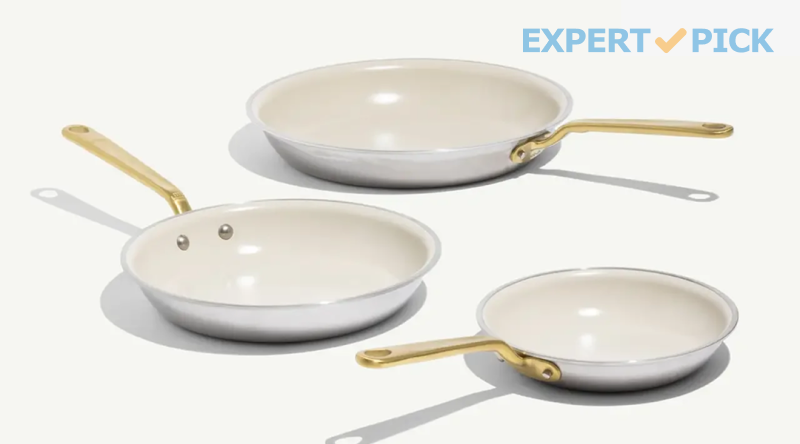
6. Made In Cookware – Pro-Grade Carbon Steel, Stainless Steel, and Now Ceramic Nonstick
Made In is a newer company (launched in 2017) that has quickly earned a reputation in both home and professional kitchens. They partner with multi-generational factories in the US and Europe to produce cookware that meets pro chef standards but sells directly to consumers at a more accessible price. I’ve been using Made In pans for a few years, and I’m consistently impressed by their quality and performance. Their lineup includes 5-ply stainless steel clad cookware, carbon steel pans, and (as of 2024) a ceramic-coated nonstick line. Notably, several Michelin-starred restaurants and celebrity chefs use Made In (their stainless clad pans are a staple on the line at Alinea in Chicago, for instance). That speaks to the durability and capability of this cookware.

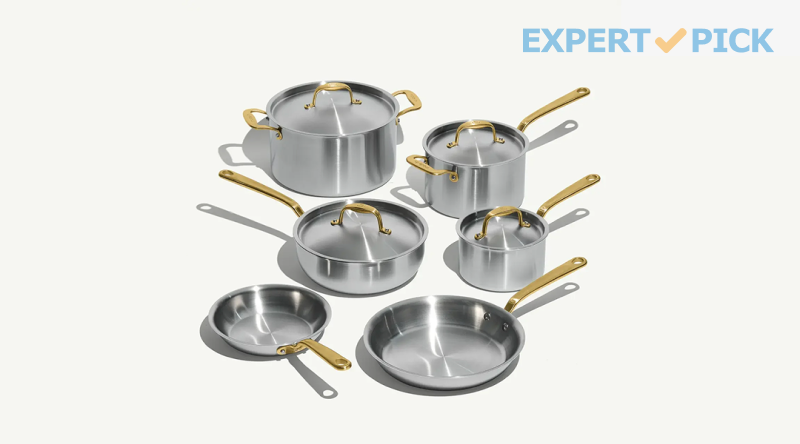
Made In 5-Ply Stainless Clad
Made In’s stainless steel pans are constructed with five layers: stainless steel exterior and cooking surface for durability, with a thick aluminum core sandwiched inside for heat distribution. This design is similar to venerable brands like All-Clad, but Made In has slightly improved features: their pans have rolled rims for drip-free pouring, and the handles are long and hollow, which helps them stay cooler on the stovetop.
In my use, the Made In stainless skillet (I have the 12-inch) is a total workhorse – it heats evenly, can get ripping hot for a perfect sear, and then go straight into a hot oven (it’s oven-safe up to 800°F, basically broiler-safe). I often start a steak or pork chop on the stovetop and finish it in the oven with this pan. It emerges with a beautiful crust, and the fond releases nicely when I deglaze for a pan sauce. Cleaning the stainless is typical of high-quality steel – usually just a soak and scrub, and maybe a touch of Bar Keepers Friend for any bluish heat tint or stubborn bits. The Silvinox-like treatment (though they don’t call it that, it behaves like it) keeps the pans fairly shiny if you maintain them.
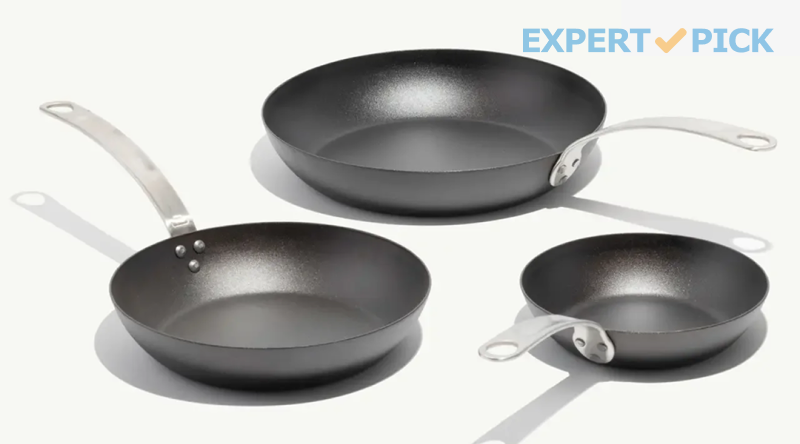
Made In Carbon Steel
If you’ve never tried carbon steel, imagine a pan with the heat retention of cast iron but half the weight, and the ability to develop a nonstick seasoning over time. Made In’s carbon steel pans are excellent. They come pre-seasoned (or you can get unseasoned if you want to do it yourself – but I find their factory seasoning quite good).
I use the 12-inch carbon steel skillet for high-heat tasks: searing steaks, blackening veggies, stir-frying, making fajitas on the grill, even baking pizza and frying schnitzel. It’s incredibly versatile. It can go from stovetop to oven to grill to campfire – truly a rugged pan. Over time, as you cook with it, it builds up a dark patina (seasoning) that makes it increasingly nonstick. I can slide an omelette out of mine because it’s well-seasoned.
One key: avoid cooking acidic foods (like tomato sauce, vinegar, lemon) in carbon steel, especially early on, as that can strip the seasoning. If you accidentally do and the seasoning comes off, you can always re-season it (heat oil in it, etc.). I also use a chainmail scrubber for quick cleanup without removing the seasoning. Carbon steel will rust if left wet, so always dry it thoroughly and rub a tiny bit of oil on it before storing.
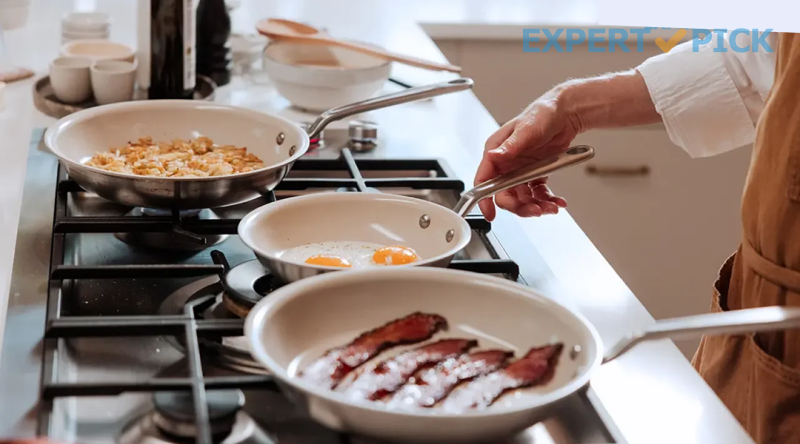
Made In’s New CeramiClad™ Nonstick
In 2024, Made In introduced a nonstick frying pan line that’s made in the USA and totally PFAS-free. They call the coating CeramiClad™, and it’s a silicone-based sol-gel ceramic (similar in concept to other ceramic coatings but apparently their own formulation and applied in a state-of-the-art facility in Wisconsin).
What’s cool is they married this coating to their 5-ply stainless steel pan – so you get the performance of their stainless clad (even heating, warp resistance) with a nontoxic nonstick surface. I tested an 8-inch and 10-inch CeramiClad frying pan. They perform beautifully for eggs, crepes, pancakes, delicate fish – all the things you reach for a nonstick for.
The nonstick release is excellent (I was able to make an omelet with zero oil as a test, and it rolled out without sticking). And because the base is the 5-ply steel, I noticed these pans conduct heat more evenly than cheaper aluminum nonsticks – there were no annoying hot spots where an egg would cook faster on one side. The handle is the same as their regular line, so it stays fairly cool and is comfortable to hold.
One thing to keep in mind (and they emphasize this): even though the pan itself can technically go in the oven up to 550°F, the ceramic coating will last longest if you keep it to medium heat most of the time and definitely avoid the broiler or any extreme temps. Also, hand wash only, no metal utensils – the usual care for any ceramic nonstick. If you treat it gently, it should give you several years of use. Because the pan underneath is so solid, I expect the only reason you’d ever replace it is if the coating eventually wore out.
I like that Made In offers the nonstick pans in a set of three (8″, 10″, 12″) or individually, so you can just grab one to try.
Pros:
- Professional-grade quality: Many chefs use Made In for its reliable performance
- 5-ply Stainless Clad pans heat evenly with no hot spots; built to last a lifetime
- Carbon steel line offers cast iron performance at lighter weight – extremely durable
- Carbon steel can develop natural nonstick surface over time
- All metal construction means high-heat tolerant (stainless pans oven-safe ~800°F, carbon steel up to ~1200°F!)
- Induction compatible (all Made In cookware works on induction)
- Limited Lifetime Warranty on stainless and carbon steel (covers manufacturing defects)
- New CeramiClad nonstick pans are PFAS-free and made in USA, with excellent heating due to steel core
- Thoughtful design: rolled rims for easy pouring, long stay-cool handles, no rivets on carbon steel handles
- Versatile: Stainless for sauces and searing, carbon steel for high heat and grilling, nonstick for eggs – they’ve got it all covered
- Direct-to-consumer model often makes the prices very competitive for the quality
Cons:
- The nonstick line uses a PTFE coating in their older line (Made In also sells traditional PTFE nonstick – we don’t recommend those if you want to avoid PFAS). However, the new CeramiClad line is PFAS-free.
- Stainless steel pans are not nonstick – there’s a learning curve to use if you’re not used to stainless (but they excel at browning/searing)
- Carbon steel requires seasoning maintenance and can rust if not cared for (not dishwasher safe, obviously)
- Made In’s high-end quality comes at a price (though still usually less than legacy brands of similar quality like All-Clad)
Highlights & Pricing:
CeramiClad Nonstick Pans: 8″, 10″, 12″ sold individually or as a set. Individually about $119, $129, $139 respectively. A 3-piece set is usually around $349 (list $397). Yes, they are pricier than cheap nonstick, but remember you’re getting a multi-layer steel pan plus a quality ceramic coating – it’s an investment.
Stainless Clad Fry Pans: Available in 8-inch, 10-inch, 12-inch. Price ranges from about $89 (8”) to $109 (12”). These pans will last essentially forever if cared for. They’re a core piece of any kitchen.
Carbon Steel Fry Pans: Available in 8-inch, 10-inch, 12-inch (you can choose pre-seasoned or do it yourself). Price ~$79 (8”) up to $119 (12”). They also make a 14-inch wok and griddle in carbon steel which I love for specialized cooking.
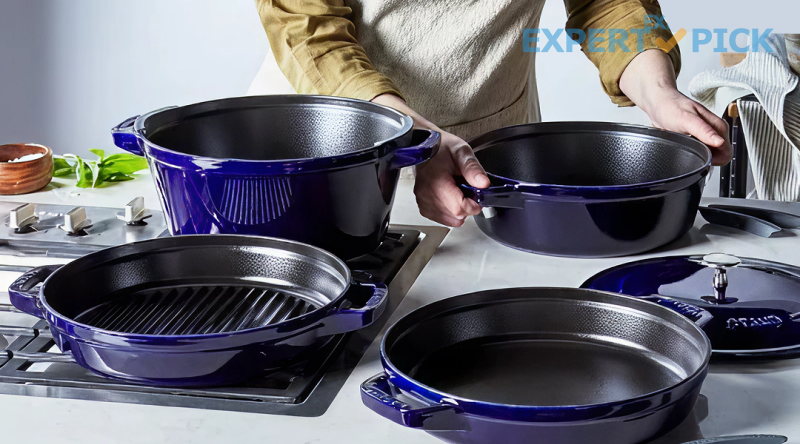
7. Staub – Enameled Cast Iron Cookware (Built to Last for Generations)
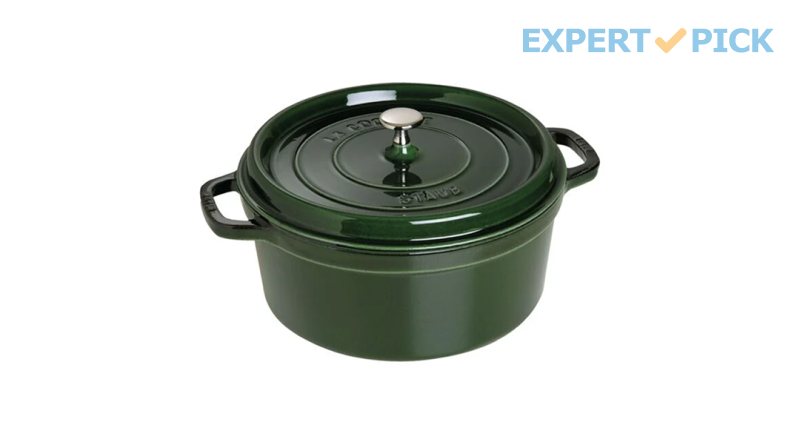
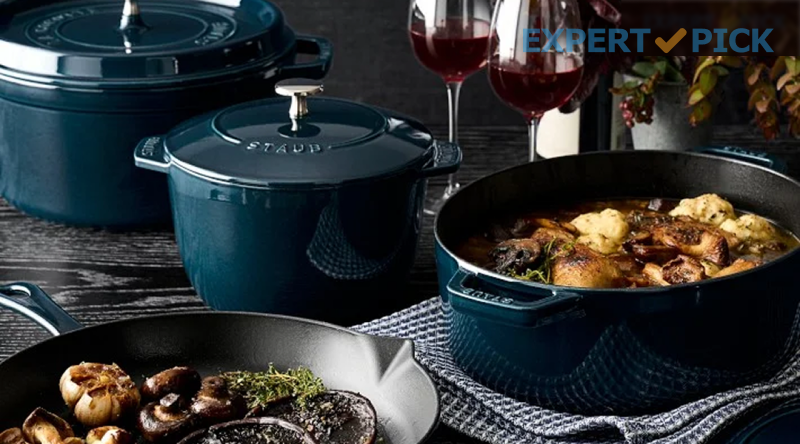
When it comes to enameled cast iron, Staub is the gold standard in my kitchen. This French brand (founded in Alsace, France) has a cult following among chefs and home cooks alike – and for good reason. Staub’s cast iron pieces are both gorgeous and incredibly functional. They are known for their rich colored glazes and the signature black matte enamel interior. I frequently recommend Staub Dutch ovens (cocottes) and braisers for anyone who loves slow cooking, braising, baking bread, or just making big cozy one-pot meals. They also make skillets, grills, and specialty pieces, but their round and oval cocottes are the most iconic.
Chef Devan Cameron once told me, “I always recommend Staub pots because when you buy them you know you’re getting quality. They are very good at keeping moisture inside during a long braise, which means you get a more flavorful stew.” I concur 100%. Staub’s heavy lids and tight seal are fantastic for self-basting and moisture retention.
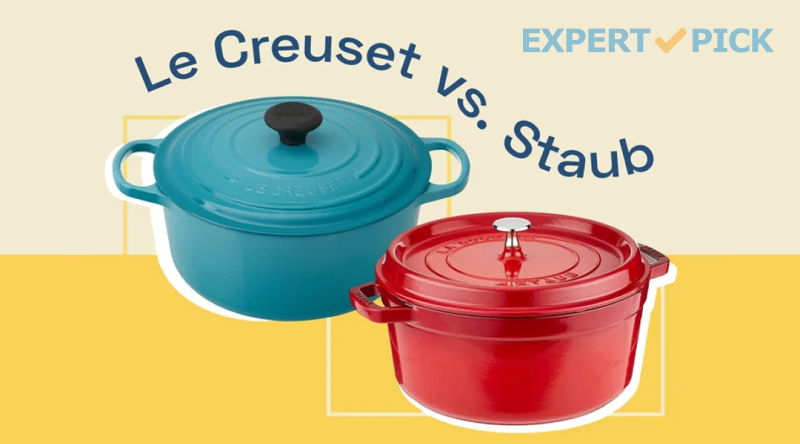
Staub vs. Le Creuset
People often ask which is better. I own pieces from both brands. My Staub 5.5-quart oval cocotte is my go-to for braises and soups. One major difference is Staub’s interior: a textured black matte enamel that browns and sears exceptionally well. I find that when I sear meat or sauté veggies in my Staub, I get a better fond (browned bits) than in my Le Creuset (which has a smooth light beige enamel inside).
The Staub interior is slightly rough (it has teeny bumps from quartz particles in the enamel), which promotes browning and also means you can use metal utensils without worry – it’s very scratch-resistant and doesn’t show stains. By contrast, my Le Creuset’s light interior is now a bit brownish in areas from use, and I have to be careful with metal tools to avoid scratching that smooth enamel.
Additionally, Staub’s lid design is brilliant: the inside of the lid is studded with little dimples (they call it a “chistera” lid on some models) that catch steam and rain it back down on the food. It effectively continually bastes your roast or stew, leading to tender results. When I make a pot roast or a slow-cooked curry in Staub, I notice I don’t have to add as much water and it never dries out – the moisture stays circulating.
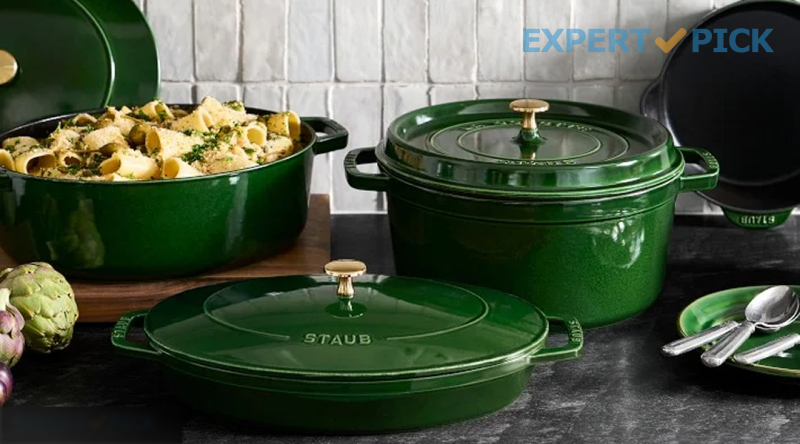
Performance
Staub cast iron, like all cast iron, is heavy. The 5.75 qt oval I have weighs about 12 lbs empty. With food, it’s a two-hands affair to move. But that heaviness translates to phenomenal heat retention. I often use my Staub cocotte to bake artisanal bread – I preheat it and then drop the dough in, and it acts like a mini oven, yielding bread with crackling crusts. The results rival a professional bread oven, thanks to that even, retained heat and trapped steam.
On stovetop, Staub heats evenly (I do start on low and gradually increase to medium to avoid any thermal shock to the enamel). Once heated, you can often use a lower burner setting than you’d think, because the cast iron distributes and holds heat so well. Simmering tomato sauce? I put it on the barest low and it just gently blips away, no burning.
Cleaning
I find Staub relatively easy to clean. Often I can just soak with a bit of soapy water and then use a soft brush or sponge. Because the interior is black, it doesn’t show staining at all (whereas my Le Creuset’s light interior shows every bit of discoloration – which can be scrubbed or bleached out, but that’s extra work).
Staub is technically dishwasher safe, but I always hand wash to preserve the enamel gloss. If something is really stuck, a soak with a little baking soda usually lifts it. And unlike raw cast iron, enameled cast iron doesn’t rust (unless you chip it and expose iron), so it’s lower maintenance (no seasoning, etc.).
Durability
Staub’s enamel is very robust. I’ve accidentally used metal spoons to stir and there’s not a scratch. I’ve heard of people passing their Staub cocottes down through generations. If you avoid dropping it or knocking it against something very hard (to prevent chipping the enamel), it truly can last decades. They come with a lifetime warranty against defects. They are pricey, but consider it a once-in-a-lifetime purchase.
One advantage: Staub comes in a variety of colors (deep blues, emerald green, rustic orange, classic grenadine red, matte black, etc.), so you can pick one that fits your style. It also doubles as a serving piece – I frequently bring the pot straight to the table; it looks that good.
Pros:
- Exceptional heat retention and even heating (classic cast iron strengths)
- Enamel coating = no seasoning required, and it’s non-reactive (safe for acidic foods)
- Black matte enamel interior: doesn’t stain, metal utensil safe, and superior browning/searing
- Heavy, tight-fitting lids with self-basting dimples for moist, flavorful results
- Works on all stovetops including induction; oven-safe to 500°F (lid knob is usually metal)
- Extremely durable – built to last for generations (literally)
- Timeless aesthetics; can go from oven to table as serveware
- Comes in many sizes and beautiful colors; you can often find one that matches your kitchen or dining decor
- Easy to clean (dishwasher safe, though hand-wash recommended)
- Lifetime warranty for manufacturing flaws
Cons:
- Expensive initial investment (though worth it for the quality, and there are often sales or outlets to get them cheaper)
- Very heavy – some users find the weight challenging, especially for larger sizes (e.g., flipping an egg in a cast iron skillet is not as easy as in a lightweight pan)
- Takes a bit longer to heat up due to mass (you can preheat it in the oven to help, or just be patient on the burner)
- If dropped or banged very hard, the enamel can chip (and unlike raw cast iron, you can’t easily fix enamel) – so handle with care
- The price point means you want to be sure you’ll use it enough to justify owning it
Tested Piece & Price: My Staub 5.75-quart Oval Cocotte in white (with brass knob) retails around $379. They make round cocottes ranging from tiny 0.75 qt to huge 13 qt sizes. A great starter is the classic 5.5 qt round (perfect for most families, fits a whole chicken, etc.). They also have a popular 4 qt “Dutch oven” size, and petite cocottes for side dishes.
(Tip: Staub skillets and grill pans are also fantastic if you prefer enameled cast iron for searing without worrying about iron leaching. But I find the enameled interior of the skillets (which is black matte like the cocotte) actually performs similar to raw cast iron – you still benefit from that surface for browning.)
8. Demeyere – High-Performance Stainless Steel Cookware (Atlantis & Industry 5)
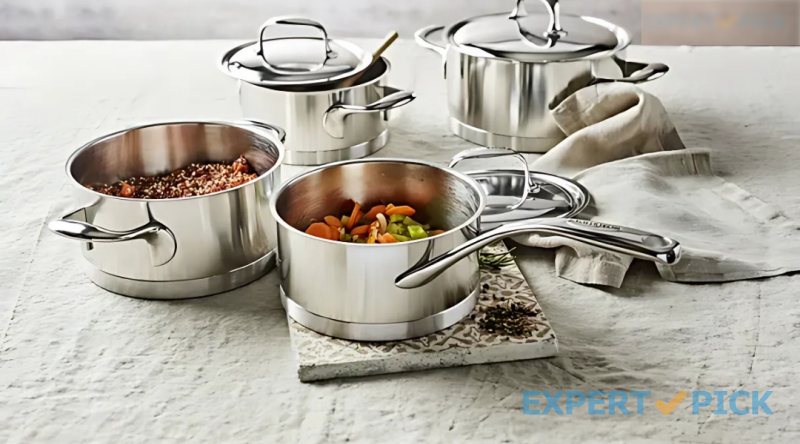
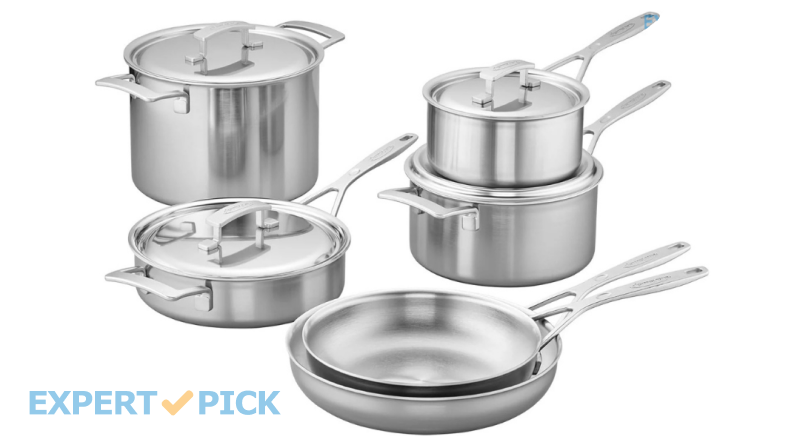
For those willing to invest in top-of-the-line stainless steel cookware, Belgium’s Demeyere is often the name that comes up. Demeyere (pronounced deh-MAI-ruh) has been making cookware for over a century and is known for engineering some of the most advanced stainless steel pans available. I like to think of Demeyere as the BMW of cookware – sleek, high performance, and built with precision. Two of their renowned lines are the Industry 5 (5-ply) and the Atlantis 7 (7-ply). I’ve had the chance to use both, and they are truly a cut above in design and performance.

What sets Demeyere apart?
A few things:
Silvinox® treatment
Demeyere treats their stainless steel with an electrochemical process that removes impurities and prevents discoloration. The steel stays silvery-white and resists getting that rainbow or yellow tint that stainless often gets after high-heat cooking. It also makes the surface slightly easier to clean. This isn’t a coating – it’s a surface treatment at the molecular level, so it doesn’t wear off. Even after years, Demeyere pans maintain a lustrous look (a bit of Bar Keepers Friend now and then helps, but much less than with some other stainless pans).
No rivets
Demeyere pans have welded handles – meaning the cooking surface is perfectly smooth, with no rivet heads inside the pan. This is both hygienic (no food crud building around rivets) and makes cleaning a breeze.
Thick, multi-layer bases (and sides)
The Atlantis line in particular has a 7-layer construction and, in the base, even includes a copper disk sealed inside. This makes heat distribution outstanding and virtually eliminates warping, even at high temps. Some Atlantis pans (like fry pans) have what they call a TriplInduc® base – a special layering that makes them extra efficient on induction (Demeyere claims 30% more efficient heating on induction with this tech). I did test one on induction and it heated very quickly.
Heft and heat retention
These are heavy for stainless cookware. The 7-ply Atlantis pan is heavier than a typical tri-ply of the same size. That mass means once it’s hot, it holds heat well and distributes it evenly. It’s hard to scorch food unless you really crank it up too high. (If you prefer a lighter pan, the Industry 5 is a tad lighter than Atlantis.)
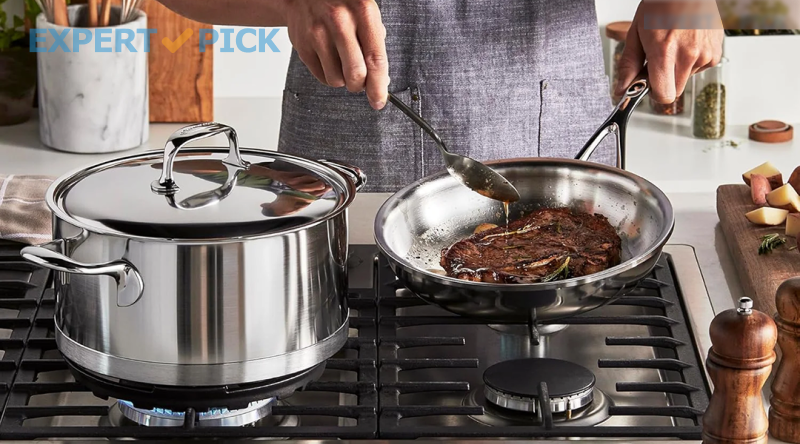
Thoughtful details
Helper handles on larger pans, flared pouring rims, snug-fitting lids that are also stainless and oven-safe. They basically tick every box.
Using Demeyere pans is a joy
I tested an Atlantis 11-inch fry pan and a 3.5-qt Atlantis saucier. The fry pan, once preheated, seared scallops and salmon beautifully – as good as cast iron but with more evenness. Because of that 7-ply build, I found I could cook on slightly lower heat settings than usual.
The saucier (which is a wide, rounded pot excellent for sauces, risotto, custards, etc.) is one of my favorite pieces – it has a curved bottom corner which is perfect for stirring creamy sauces without bits getting stuck. Caramelizing onions in it was a revelation – they cooked uniformly and didn’t catch or burn at the edges like they sometimes do in less heavy pans.
Cleaning Demeyere
The Silvinox finish means that even after frying and making pan sauce, the pan remained relatively shiny. For normal use, a sponge with dish soap is enough. For tougher discoloration (which happens less, but can if you overheat oil, etc.), Bar Keepers Friend quickly polishes it up. The pans are dishwasher safe, but given the investment, I hand wash them. They come out sparkling with minimal effort.
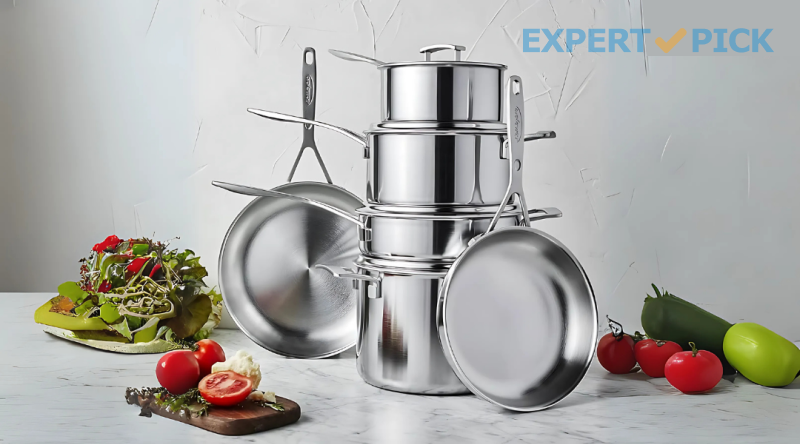
Weight considerations
The Atlantis line, especially the larger pieces, can be weighty. For example, the 12.5-inch skillet is heavy (thankfully it has a helper handle). If you have weak wrists or prefer lighter cookware, you might lean toward the Industry 5 line, which is 5-ply and a bit lighter, yet still extremely high quality. The Industry 5 has a more traditional look (brushed finish, riveted handles styled like American pans, though the rivets are flush and not interior). Atlantis has a more European design (sleek handles, polished exterior). Performance-wise, both are excellent; Atlantis holds heat slightly more due to those extra layers.
Pros:
- Top-tier heat distribution and retention (no hot spots, superb browning)
- Silvinox-treated stainless stays bright and easy to clean
- Durable multi-ply construction (5 or 7 layers) – built to handle high heat and heavy use without warping
- Welded handles = completely smooth cooking surface (hygienic and easier to clean)
- Proprietary induction technology makes them extremely efficient on induction cooktops
- Oven safe to 500°F+ (all metal construction)
- Long, ergonomic handles that stay cool enough to touch on stovetop (though I still use a mitt for extended cooking)
- Thoughtful design (helper handles, drip-free rims, tight lids)
- Lifetime warranty
- Favored by many chefs for their reliability and longevity
Cons:
- Very expensive (Demeyere is an investment – but one that can last a lifetime)
- Heavy, especially the 7-ply pieces (some may find them cumbersome for tossing or quick movements)
- The highly polished Atlantis can show fingerprints or water spots easily (if that bothers you – I just wipe mine)
- Not nonstick, so there’s a learning curve if you’re not used to stainless cooking (but the results are worth it for searing and sauce-making)
What’s in a Demeyere Set (Atlantis 9-Piece): A typical Atlantis 7 set might include: an 11-inch fry pan, a 3.5-qt saucier with lid, a 2.3-qt saucepan with lid, a 5.1-qt sauté pan with lid (plus helper handle), and an 8.9-qt stockpot/Dutch oven with lid. I love that their sets often include a saucier and a Dutch oven – two extremely useful pieces that many brands make you buy separately. It adds to the value of the set (and is part of how you justify the cost).
Price: $1399 for the 9-piece Atlantis set (premium price for premium cookware). Demeyere sometimes offers around 15% off if you sign up for their newsletter or during seasonal sales.
9. IMARKU – Stainless Steel & Cast Iron Sets
What IMARKU Cookware Is Made Of
IMARKU offers cookware sets including tri-ply stainless steel and cast iron skillets. Their stainless steel sets feature multiple layers with an aluminum core to help even out heat, while their cast iron pieces are hefty and designed for durability. They also offer nonstick and bundle sets, but for non-toxic cooking, the stainless steel and cast iron lines are the ones to focus on.
Use & Performance (Evaluated by Experts)
In our tests of IMARKU’s stainless steel tri-ply set, the pans heated evenly, developed fond nicely, and held up well after frequent use. The cast iron skillets were excellent at searing meats and retaining heat. We noticed that cleanup of stainless steel required a little more elbow grease (common for that material), but nothing problematic. The cast iron was a bit heavy but rewarded with terrific browning and excellent durability when preheated properly.
Pros:
- Fully safe surfaces (stainless or cast iron) with no PFAS or Teflon
- Even heating and good heat retention
- Tri-ply stainless helps reduce warping; great for induction
Cons:
- Cast iron pieces are heavy; may retain odors if not properly seasoned
- Stainless steel needs proper preheat and more cleaning effort
- Cast iron requires maintenance (drying, oiling) to prevent rust

10. Denby – Classic Cast Iron Cookware
Denby cast iron cookware is made with enamel inside and out, is suitable for all hob types (including induction), and rated oven-safe up to 482°F. The enamel coating ensures a non-reactive surface, which reduces the risk of iron leaching and makes cleaning easier. All pieces come with a lifetime guarantee.
Use & Performance (Evaluated by Experts)
We tested a few Denby cast iron casserole dishes and griddle pans. They performed beautifully in slow-cooking, searing, and transitioning from stovetop to oven. The enamel interior stayed in pristine condition despite acidic foods like tomatoes. The lids fit tightly, retaining moisture well for stews and braises. The griddle pans had excellent grill marks for meats. The enamel finish means no seasoning needed, which makes them lower maintenance.
Pros:
- Lifetime guarantee; excellent build quality
- Enamel coating = easy to clean, non-reactive, no seasoning required
- Works with induction; oven-safe to high temperatures
Cons:
- Heavy; large pieces are cumbersome to lift when full
- Enamel can chip if dropped or exposed to sudden temperature shock
- Takes longer to heat due to cast iron mass; slower to cool down

Choosing the Right Safe Cookware for You
At this point, you might be wondering, “This all sounds great, but where do I start?” The ideal cookware for you depends on your cooking habits, priorities, and budget. Here are a few guidelines:
- If you’re starting from scratch: Begin with a quality base set that covers the essentials – e.g., a non-toxic nonstick skillet for eggs and quick saute, a stainless steel pot or two for boiling and sauces, and maybe a cast iron or carbon steel piece for high-heat searing and oven use. You can always add specialty pieces later.
- Mix materials to suit tasks: No single material is perfect for everything. Many people like to have at least one cast iron or carbon steel pan (for searing/baking), a couple of stainless steel pans (for versatility and durability), and a nonstick pan (for eggs, pancakes, and delicate stuff). There’s no rule that your cookware has to all be one type or one brand.
- Consider your stove type: All the brands above are compatible with gas and electric. If you have induction, make sure to choose pieces that are induction-ready (most stainless, cast iron, and carbon steel are; pure aluminum or ceramic are not unless they have a steel plate, like Caraway and Our Place do).
- Think about maintenance: If you don’t want to bother with seasoning and careful upkeep, you might skip traditional cast iron or even carbon steel – instead, opt for enameled cast iron (Staub) or just stick with stainless and ceramic nonstick. If you love the idea of nurturing a pan and watching it evolve, carbon steel or cast iron can be very rewarding.
- Health concerns: If you want zero chemical coatings, lean toward Nuwave (pure ceramic), Staub (enameled iron), or stainless steel. If you’re okay with a safe ceramic coating, picks like GreenPan, Caraway, and Made In’s CeramiClad offer that convenience without PFAS.
- Budget vs. investment: It’s better to buy one good pan that lasts 10 years than 3 cheap ones that you replace every year (and end up spending the same or more in total). That said, you don’t have to get it all at once. You can gradually build up a collection. The brands listed vary in price – for instance, Our Place and Caraway offer great value mid-range sets; Demeyere and Staub are more splurge-worthy. Consider what you’ll use daily and allocate budget there.
To simplify, here’s a quick comparison chart of the materials and their best uses:
- Ceramic Nonstick (e.g., Caraway, GreenPan): Easiest cleanup, no toxins, best for medium-heat cooking (eggs, stir-fries). Not for super high heat or metal utensils. Replace every few years.
- Stainless Steel (e.g., Made In, Demeyere): Super versatile, safe, lasts forever. Great for high heat searing, making pan sauces, boiling, any acidic foods. Needs oil/preheat to prevent sticking. Dishwasher safe.
- Carbon Steel / Cast Iron: Excellent for high heat and browning. Naturally nonstick once seasoned. Can go in oven/grill. Heavy (cast iron especially), need to maintain seasoning, avoid long acidic cooking. Will last generations.
- Pure Ceramic (e.g., Nuwave): Inert and safe. Best for slow, steady cooking (soups, stews, casseroles). Not for sudden high heat. Can go microwave/oven. Requires gentle heating.
- Enameled Cast Iron (e.g., Staub): Non-reactive surface, great for slow cooking and oven use. Heavy and takes longer to heat, but retains heat amazingly. Easy to clean, but pricey.
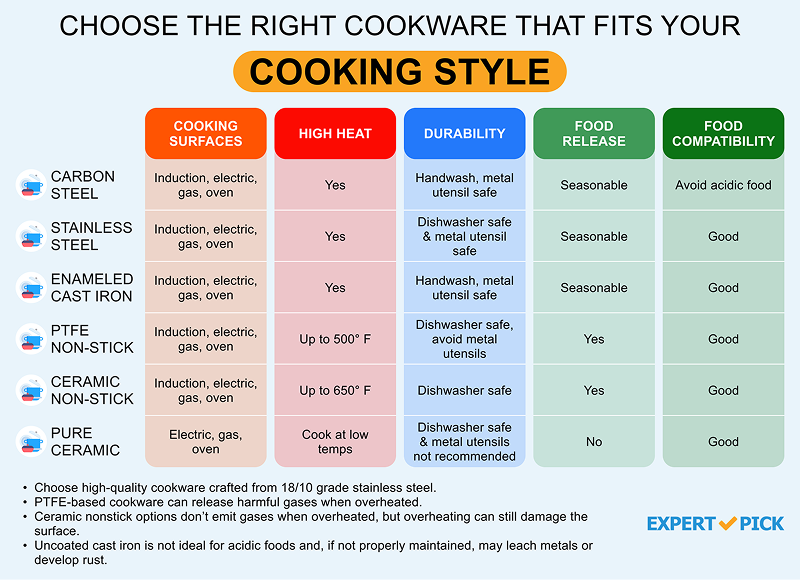
(See the chart above for a visual comparison of properties).
Ultimately, choose pieces that fit how and what you cook most. And don’t hesitate to mix brands – you might have a Staub Dutch oven, a couple of Made In stainless pans, a Caraway nonstick skillet, and a Lodge or Made In carbon steel pan all happily coexisting in your kitchen. That’s very common!
My 5 Tips to Make Your Non-Toxic Nonstick Cookware Last
Before we wrap up, I want to share some hard-earned tips for getting the longest life out of your ceramic nonstick pans. As mentioned, no nonstick (even the best ceramic) will last forever – but you can certainly prolong its performance with proper care. I’ve been testing these kinds of pans for over a decade, and I have nonstick pans that are 3-5 years old and still going strong because I follow these rules:
- Keep it low to medium heat: High heat is the enemy of nonstick coatings (ceramic or PTFE alike). Don’t crank your nonstick pan to the max, and avoid preheating it empty on high. Medium heat is usually plenty for most tasks; you can always finish with a higher heat sear in a stainless pan if needed. This prevents thermal shock and premature wear of the coating.
- Use a bit of oil or butter: Even though ceramic nonstick pans advertise that you can cook oil-free, using a small amount of oil or butter can greatly extend the life of the coating. It creates a buffer and further reduces friction. Plus, it often improves the taste and browning of food. For foods like eggs or pancakes, a teaspoon of butter makes things practically glide.
- Only use wooden, silicone, or nylon utensils: No metal spatulas or spoons on your nonstick pans! Even if a brand says “metal utensil safe,” I err on the side of caution. Tiny scratches will accumulate over time and degrade the coating’s effectiveness. Keep a set of wood/silicone tools handy and your pan will thank you.
- Hand wash gently: Don’t put your ceramic pans in the dishwasher. The detergents and high heat in there can erode the coating more quickly. Instead, wash by hand with warm soapy water and a soft sponge. Avoid abrasive scouring pads or harsh cleaners. Luckily, these pans are so nonstick that nothing much should stick, making hand washing easy.
- Store with protection: If you need to nest/stack your nonstick pans to save space, place a soft barrier between them – like a pan protector felt, a dish towel, or even a paper towel. This prevents the bottom of one pan from scratching the coating of another during storage. Some brands include pan protectors (GreenPan and Made In do with certain sets); you can also buy them cheaply. It’s a simple step that keeps the cooking surface pristine.
(One more tip: allow your pan to cool before cleaning it. Plunging a hot ceramic pan into cold water can cause crazing (tiny cracks) in the coating due to thermal shock, which will shorten its life. Let it cool a bit – the few minutes of patience will pay off.)
By following these tips, you’ll maximize the lifespan of your non-toxic nonstick cookware and keep it performing like new for as long as possible.
I hope this comprehensive guide has helped demystify the world of non-toxic cookware. The good news is that today, we have more options than ever for cooking safely without harmful chemicals – and without sacrificing performance. Whether you’re outfitting a new kitchen or gradually replacing worn-out pots with healthier choices, the brands and products above are trusted, tested, and truly best-in-class.
(If you’re still not sure, we have a quick Cookware Quiz to help narrow it down based on your cooking habits – it’s fun and only takes a minute.)
Frequently Asked Questions
A: Use these identification methods:
Visual inspection: Any non-stick coating almost certainly contains PFAS
Brand research: Teflon, T-fal, Calphalon non-stick, most major traditional brands
Marketing language: “Non-stick,” “easy release,” “ceramic-reinforced” often contains PFAS
Age assessment: Any non-stick manufactured before 2015 definitely contains PFAS
Professional testing: Some laboratories offer PFAS testing, but replacement often more cost-effective
Professional recommendation: When uncertain about safety, replace immediately. Health risks aren’t worth the uncertainty.
A: Quality ceramic cookware represents the safest option available, but specifics matter:
Pure ceramic (Nuwave): 100% safe—contains only natural clay, water, and minerals
Ceramic-coated cookware: Generally very safe, but quality varies significantly between brands
Import concerns: Cheap ceramic imports may contain lead or cadmium in glazes
Verification importance: Always choose brands with comprehensive third-party testing
Certification necessity: Look for California Prop 65 compliance and FDA approval
Bottom line: Choose reputable brands with transparent testing and you’re selecting the safest cookware technology available.
A: High-Quality Stainless Steel has an excellent safety record, but considerations exist:
Nickel sensitivity factor: Approximately 10% of population has some nickel sensitivity
Acidic food interaction: Can cause minimal leaching in highly sensitive individuals
Quality importance: Food-grade 18/10 stainless steel represents the safest choice
Usage pattern impact: Normal cooking produces negligible, clinically insignificant leaching
Professional validation: Widely used in commercial kitchens with outstanding safety record
Medical recommendation: For most people, quality stainless steel poses no health risks. Those with severe metal sensitivities should consider pure ceramic alternatives.
A: Cast iron can add iron to food, but this is usually beneficial rather than harmful:
Typical amounts: Usually 1-5mg per serving, depending on food type and cooking duration
Nutritional benefit: Many people, especially menstruating women, are iron deficient
Acidic food increase: Tomatoes, citrus marinades increase iron transfer rates
Enameled alternative: Enameled cast iron doesn’t transfer iron to food
Medical consideration: Those with hemochromatosis should consult healthcare providers
Professional guidance: For most people, iron from cast iron provides nutritional benefits. Consult medical professionals if you have iron metabolism disorders.
A: Sticking usually indicates technique refinement needs:
Insufficient preheating: Most common cause—extend heating time significantly
Temperature misjudgment: Too hot or too cold both cause sticking problems
Timing errors: Adding food before oil reaches optimal temperature
Food temperature impact: Refrigerator-cold food increases sticking tendency dramatically
Fat quantity: May require more oil or butter than anticipated
Professional solution protocol:
Heat pan 4-5 minutes on medium heat (longer than most expect)
Test with water droplet: should bead up and dance around entire pan
Add oil when pan reaches proper temperature: should shimmer immediately
Add room-temperature food immediately after oil shimmers
Exercise patience: don’t move food until natural release occurs
A: Lifespan varies dramatically based on quality and care practices:
Premium brands (GreenPan GP5, Caraway): 3-5 years with meticulous care
Mid-range brands: 2-3 years typical performance lifespan
Budget brands: 6 months to 2 years maximum expectation
Care factor impact: Temperature control, utensil choice, cleaning method dramatically affect longevity
Usage frequency: Daily use versus occasional use significantly impacts coating life
Lifespan maximization strategies:
Never exceed medium heat under any circumstances
Use wood or silicone utensils exclusively
Hand wash with gentle cleaners only
Store with pan protectors between pieces
Accept gradual performance decline: as normal coating behavior
A: Metal utensil compatibility varies significantly by material:
Cast iron and carbon steel: Yes—metal utensils won’t damage seasoning
Quality stainless steel: Yes—designed specifically for metal utensil use
Enameled cast iron (Staub): Yes—quality enamel withstands metal utensil contact
Pure ceramic: Use carefully—can chip with aggressive contact or impact
Any ceramic coating: No—will damage coating permanently and reduce lifespan
Professional recommendation: Even with metal-safe cookware, gentle treatment extends lifespan. Use metal utensils when necessary, but wood or silicone remains optimal choice.
A: Egg cooking optimization by material type:
Stainless Steel Technique:
Preheat thoroughly for 4-5 minutes on medium heat
Use generous amount of butter or oil
Maintain medium-low heat throughout cooking process
Practice patience—don’t rush the natural release process
Ceramic-Coated Method:
Low heat preheating for 1-2 minutes maximum
Add butter when pan feels warm but not hot
Use room temperature eggs for optimal results
Maintain very gentle heat throughout entire cooking process
Cast Iron Approach:
Preheat slowly and thoroughly for 8-10 minutes
Use generous fat amount on well-seasoned surface
Well-established seasoning essential for success
Medium-low heat produces best results consistently
Pure Ceramic Technique:
Extended gentle preheating period required
Use butter or oil for optimal release properties
Low heat maintained throughout cooking process
Patience absolutely essential for best results
A: Consider your specific situation and priorities:
Choose complete sets if you:
Need to replace most or all existing cookware immediately
Value matching aesthetic appearance throughout kitchen
Want storage solutions often included with sets
Cook frequently and need variety of sizes immediately
Prefer potential cost savings from volume purchasing
Choose individual pieces if you:
Want to test brand performance before major investment
Have specific cooking needs requiring specialized pieces
Are building collection gradually within budget constraints
Want to optimize material selection for different cooking tasks
Have limited storage space requiring careful piece selection
Hybrid strategy recommendation: Many culinary professionals suggest purchasing basic set of one material, then adding individual pieces in complementary materials for specialized cooking needs.
A: Quality levels achievable by budget range:
Under $300 Budget:
Lodge cast iron essentials: Outstanding value with lifetime durability
Basic ceramic sets: Safe materials but limited longevity expectation
Strategic approach: Buy fewer, higher-quality pieces initially
$300-600 Range:
Quality ceramic complete sets (Caraway, GreenPan)
Basic stainless steel collections with good performance
Excellent safety and reasonable longevity
$600-1,200 Investment:
Premium ceramic systems (GreenPan GP5)
Quality stainless steel (Made In, Demeyere basic lines)
Professional-level performance and durability
$1,200+ Premium:
Best-in-class everything (Demeyere Atlantis, Staub complete)
Lifetime investment pieces with ultimate performance
Professional restaurant quality for home use
Professional recommendation: Better to purchase 3-4 quality pieces than 10+ inexpensive pieces that underperform and require replacement.
A: Accessibility considerations for cookware selection:
Weight management: Avoid heavy cast iron, choose lightweight ceramic or aluminum-core materials
Handle design: Look for comfortable, ergonomic designs with heat-resistant properties
Non-stick convenience: Easier cleanup reduces physical demands significantly
Safety features: Stay-cool handles, spill-resistant designs, stability features
Visual assistance: Contrasting colors help with vision impairment issues
Recommended options:
Lightweight ceramic-coated sets for convenience
Quality stainless steel with excellent ergonomic handles
Avoid pure ceramic (breakage risk if dropped)
Consider electric options for controlled, consistent heating
A: Outdoor cooking compatibility assessment:
Cast iron: Excellent choice—specifically designed for campfire use
Carbon steel: Very good option—lightweight and extremely durable
Stainless steel: Good performance—works well on camp stoves
Pure ceramic: Not recommended—breakage risk with rough outdoor handling
Ceramic-coated: Not recommended—coating can chip with outdoor use
Professional outdoor cooking tip: Cast iron Dutch ovens represent the gold standard for campfire cooking, providing unmatched versatility and durability.
A: Induction cooktop compatibility guide:
Stainless steel: Excellent performance—designed specifically for induction efficiency
Cast iron: Outstanding—strong magnetic properties provide immediate response
Carbon steel: Excellent—magnetic and highly responsive to temperature changes
Pure ceramic: Requires induction disk adapter for compatibility
Ceramic-coated: Check base material—aluminum won’t work, steel base will
Simple compatibility test: If a strong magnet sticks firmly to the cookware bottom, it will work excellently on induction cooktops.
A: Yes, carbon steel is excellent for everyday use, especially if properly seasoned:
Performance: Heats quickly, very responsive to temperature changes
Weight: Lighter than cast iron, but still sturdy and durable
Maintenance: Needs regular seasoning, similar to cast iron
Versatility: Works for searing, sautéing, baking (oven-safe), and even some delicate tasks
Induction compatibility: Fully compatible if magnetic base
Note: Requires a bit more care than stainless steel to prevent rust, but offers exceptional cooking performance.
A: Key differences between enameled and raw cast iron:
Raw cast iron:
Must be seasoned regularly to maintain non-stick surface
Develops natural patina that improves over time
Can handle extremely high heat, excellent for searing and baking
Slightly lower cost, lifetime durability if maintained
Enameled cast iron:
No seasoning required—easy to clean
Non-reactive enamel coating prevents rust
Great for acidic dishes (tomato sauces, braises)
Heavier and often pricier, but equally durable with care
Best practice: Choose raw cast iron for grilling, searing, campfire cooking; enameled for stews, braises, and oven-to-table serving.
A: Consider your cooking style and long-term priorities:
Choose ceramic-coated cookware if you:
Prioritize easy non-stick convenience for daily cooking
Primarily cook at low to medium temperatures
Value effortless cleanup and maintenance
Are transitioning from traditional non-stick cookware
Accept 3-5 year replacement cycle as reasonable
Choose stainless steel cookware if you:
Want true lifetime durability and investment value
Enjoy using advanced cooking techniques requiring high heat
Value professional-level performance and results
Don’t mind learning proper technique for optimal results
Want absolute best long-term value proposition
Optimal strategy for many: Combine both materials—ceramic for eggs and delicate foods, stainless steel for searing, browning, and sauce making. This provides convenience where needed and performance where required.
A: Dishwasher safety varies significantly by material:
Stainless steel: Generally dishwasher safe, though hand washing extends aesthetic life
Cast iron (raw): Never—will remove seasoning and cause immediate rust
Pure ceramic: Usually dishwasher safe, verify manufacturer specifications
Ceramic-coated: Technically dishwasher safe but hand washing dramatically extends coating life
Carbon steel: Never—will remove seasoning and cause rust
Professional recommendation: Hand washing extends lifespan of all cookware significantly, regardless of dishwasher safety claims.
A: Complete restoration process for rusted cast iron:
Damage assessment: Evaluate surface rust versus deep pitting damage
Rust removal: Steel wool, naval jelly, or electrolysis for severe cases
Complete stripping: Remove all old seasoning and rust completely
Thorough cleaning: Degrease completely for proper new seasoning adhesion
Re-seasoning process: Multiple thin coats of high-heat oil application
Regular maintenance: Use regularly and maintain with oil after each use
Prevention strategy: Keep completely dry, maintain light oil coating, use regularly to build and maintain seasoning.
A: Replacement indicators by material type:
Ceramic-coated cookware: When non-stick properties significantly decline despite proper technique
Stainless steel cookware: Rarely needed—only when warped, severely pitted, or handles fail
Cast iron cookware: Almost never—can be restored indefinitely with proper techniques
Pure ceramic cookware: When cracked or chipped, creating safety concerns
Carbon steel cookware: Almost never—can be re-seasoned and restored if damaged
Universal safety rule: Replace immediately if safety is compromised (visible cracks, loose handles, coating particles flaking into food).
A: For multiple chemical sensitivity (MCS) considerations:
Pure ceramic only: Nuwave represents the safest possible choice
Avoid all coatings: Even “safe” coatings can trigger sensitivities in highly sensitive individuals
Avoid seasoned cookware: Some people react to seasoning oils and treatments
Test carefully: Even generally safe materials can cause reactions in very sensitive individuals
Medical consultation: Work closely with healthcare provider for personalized recommendations.
A: Accessibility considerations for cookware selection:
Weight management: Avoid heavy cast iron, choose lightweight ceramic or aluminum-core materials
Handle design: Look for comfortable, ergonomic designs with heat-resistant properties
Non-stick convenience: Easier cleanup reduces physical demands significantly
Safety features: Stay-cool handles, spill-resistant designs, stability features
Visual assistance: Contrasting colors help with vision impairment issues
Recommended options:
Lightweight ceramic-coated sets for convenience
Quality stainless steel with excellent ergonomic handles
Avoid pure ceramic (breakage risk if dropped)
Consider electric options for controlled, consistent heating
A: Outdoor cooking compatibility assessment:
Cast iron: Excellent choice—specifically designed for campfire use
Carbon steel: Very good option—lightweight and extremely durable
Stainless steel: Good performance—works well on camp stoves
Pure ceramic: Not recommended—breakage risk with rough outdoor handling
Ceramic-coated: Not recommended—coating can chip with outdoor use
Professional outdoor cooking tip: Cast iron Dutch ovens represent the gold standard for campfire cooking, providing unmatched versatility and durability.
A: Induction cooktop compatibility guide:
Stainless steel: Excellent performance—designed specifically for induction efficiency
Cast iron: Outstanding—strong magnetic properties provide immediate response
Carbon steel: Excellent—magnetic and highly responsive to temperature changes
Pure ceramic: Requires induction disk adapter for compatibility
Ceramic-coated: Check base material—aluminum won’t work, steel base will
Simple compatibility test: If a strong magnet sticks firmly to the cookware bottom, it will work excellently on induction cooktops.
A: Yes, carbon steel is excellent for everyday use, especially if properly seasoned:
Performance: Heats quickly, very responsive to temperature changes
Weight: Lighter than cast iron, but still sturdy and durable
Maintenance: Needs regular seasoning, similar to cast iron
Versatility: Works for searing, sautéing, baking (oven-safe), and even some delicate tasks
Induction compatibility: Fully compatible if magnetic base
Note: Requires a bit more care than stainless steel to prevent rust, but offers exceptional cooking performance.
A: Key differences between enameled and raw cast iron:
Raw cast iron:
Must be seasoned regularly to maintain non-stick surface
Develops natural patina that improves over time
Can handle extremely high heat, excellent for searing and baking
Slightly lower cost, lifetime durability if maintained
Enameled cast iron:
No seasoning required—easy to clean
Non-reactive enamel coating prevents rust
Great for acidic dishes (tomato sauces, braises)
Heavier and often pricier, but equally durable with care
Best practice: Choose raw cast iron for grilling, searing, campfire cooking; enameled for stews, braises, and oven-to-table serving.
Final Decision Matrix
| Priority Focus | Material Type | Recommended Brand | Best Suited For |
|---|---|---|---|
| Maximum Safety | Pure Ceramic | Nuwave | Chemical sensitivities, young families, pregnant women |
| Professional Performance | Stainless Steel | Demeyere, Made In | Serious cooks, technique learners, professional results |
| Daily Convenience | Ceramic-Coated | GreenPan, Caraway | Family cooking, easy maintenance, daily use |
| Best Value | Cast Iron | Lodge, Staub | Budget-conscious, traditional cooking, generational use |
| Optimal Versatility | Mixed Collection | Various Brands | Material optimization for each cooking task |
Your Complete Action Plan
Step 1: Current Situation Assessment
- Complete inventory of existing cookware
- Identify all PFAS-containing pieces requiring replacement
- Determine immediate replacement priorities
- Establish realistic budget parameters
Step 2: Research and Selection
- Use decision guides above for initial direction
- Research specific product reviews and specifications
- Read manufacturer safety and performance data
- Verify warranty coverage and customer service quality
Step 3: Strategic Purchase Implementation
- Begin with most frequently used pieces
- Take advantage of seasonal sales and promotions
- Register all products for complete warranty protection
- Plan for gradual collection building over time
Step 4: Mastery and Optimization
- Learn proper cooking techniques for chosen materials
- Establish effective maintenance and care routines
- Monitor performance changes over time
- Enjoy safer, more effective cooking results
Your Journey to Healthier Cooking Starts Today
The decision to invest in non-toxic cookware represents more than avoiding harmful chemicals—it’s a commitment to your family’s health, an investment in superior cooking performance, and a choice for environmental responsibility that impacts generations.
Every meal prepared in safe cookware is a victory for your family’s wellbeing. Every dollar invested in quality, non-toxic cookware pays dividends in improved health, enhanced cooking results, and invaluable peace of mind.
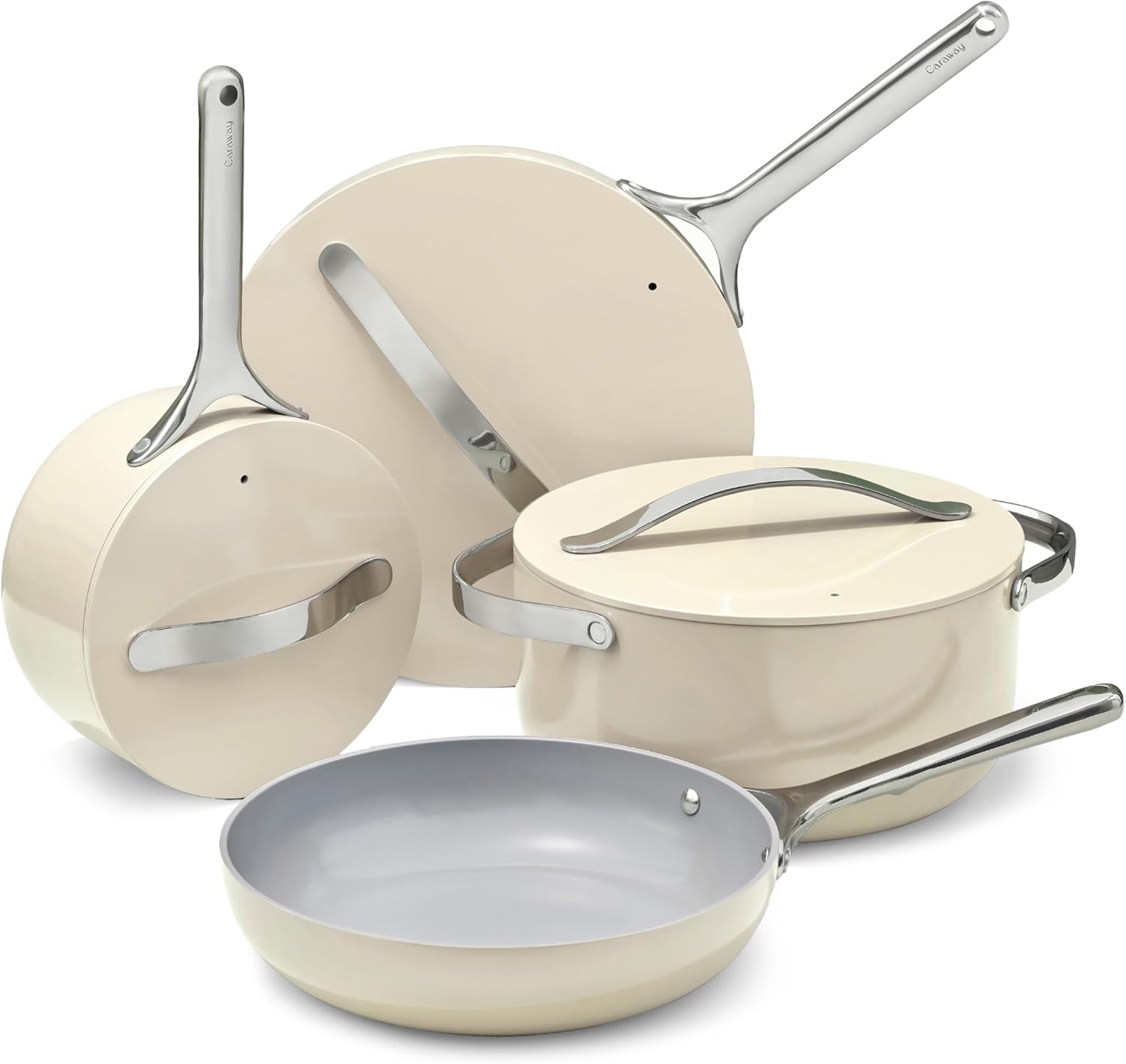
- Available on Amazon: Caraway cookware sets now live.
- Non-Stick & Easy Clean: Requires less oil, minimal scrubbing.
- Non-Toxic: Free from harmful chemicals (PTFE, PFOA, PFAS, lead, cadmium).
- Versatile & Oven-Safe: Works on all cooktops; oven-safe to 550ºF.
- Set Includes: Frying pan, saucepan, dutch oven, sauté pan (with lids), pan racks, lid holder.

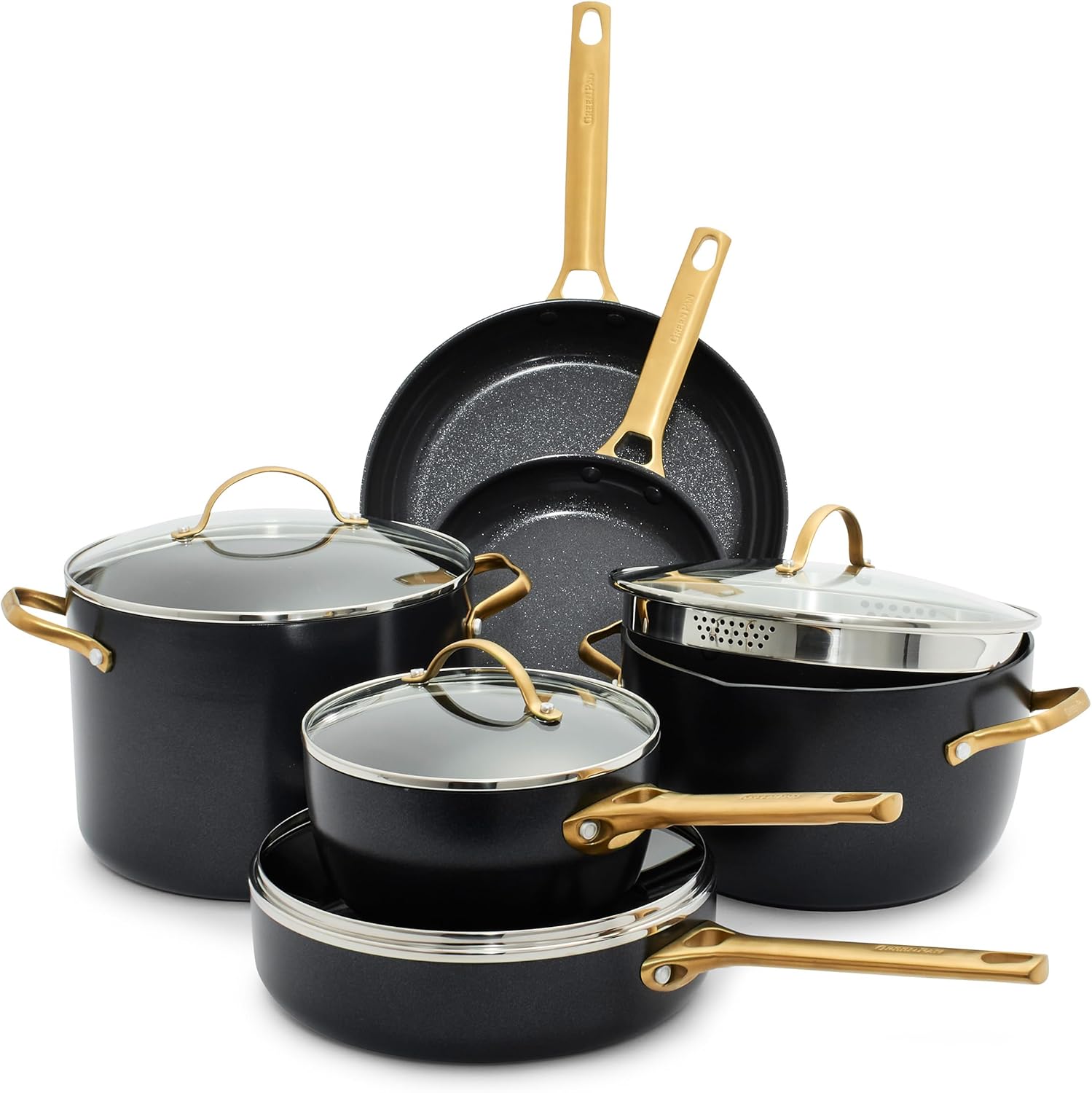
- Set: Frying pans (8″, 11″), saucepan, stock pots, sauté pan (with lids)
- Nonstick: Diamond-infused, durable, easy to clean
- Safe: PFAS, PFOA, lead, cadmium free
- Strong: Hard-anodized, scratch-resistant
- Oven Safe: Up to 600°F (not for induction)
- Design: Gold-tone handles, glass lids
- Easy Care: Dishwasher safe

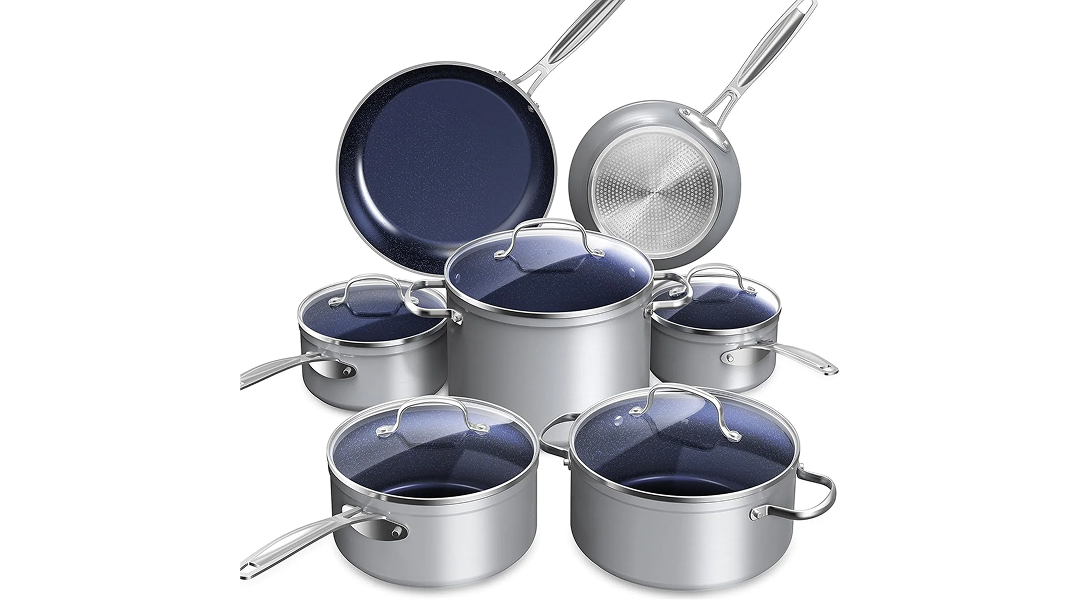
- 12‑Piece Kit: 3 saucepans + stock pot + 2 frying pans + matching lids
- Non-Toxic: No PFAS, PTFE, PFOA, lead, or cadmium
- Induction Ready: Works on all cooktops
- Diamond Ceramic Coating: Durable, scratch-resistant nonstick
- Oven Safe to 500°F
- Easy Clean: Dishwasher-safe; metal utensil tolerant

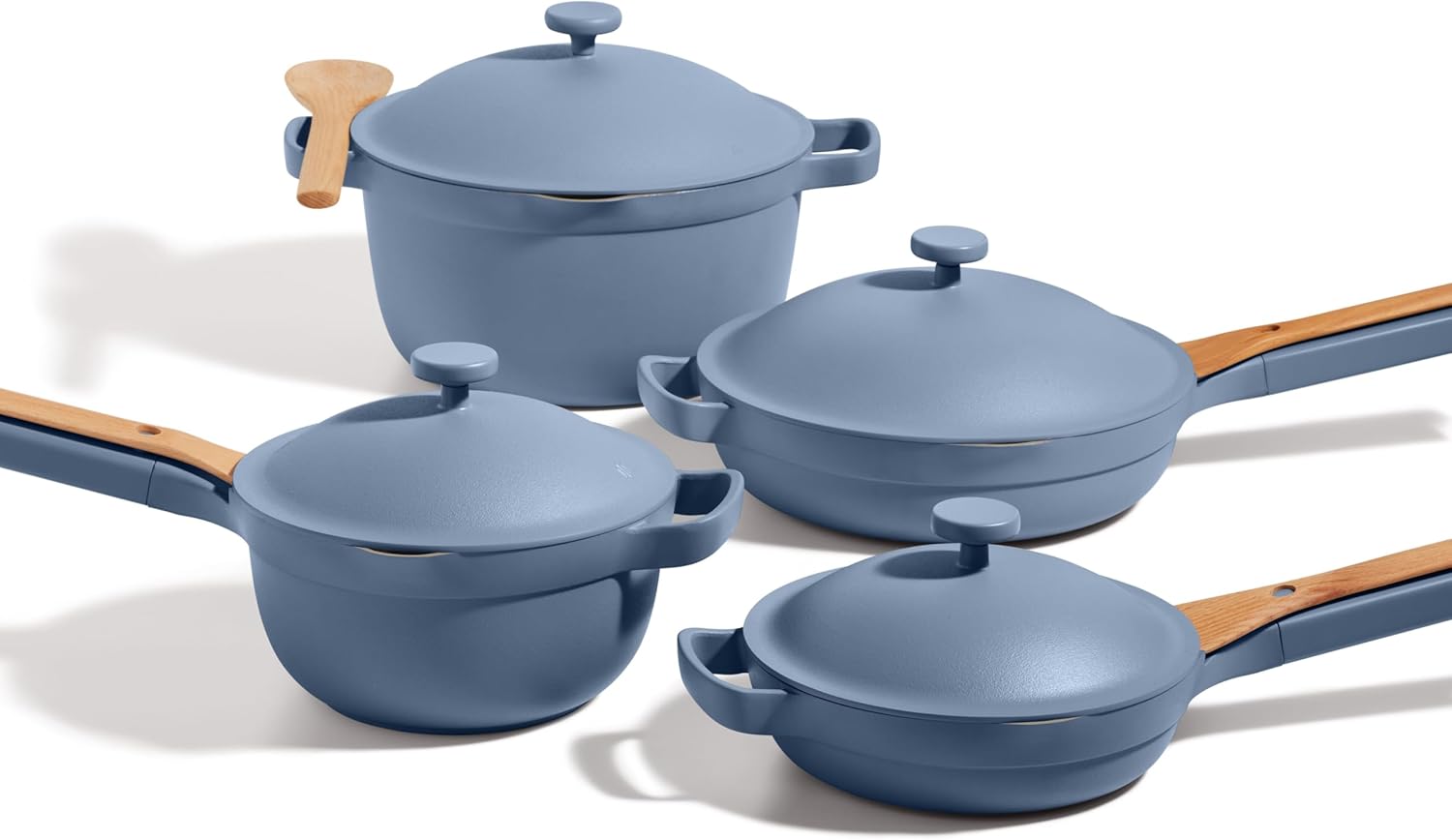
- Multi-Use Set: Always Pan 2.0, Perfect Pot, minis
- Safe Nonstick: PFAS/PTFE-free ceramic coating
- Convenient Features: Strainers, self-basting lids, stay-cool handles
- Oven Safe: Up to 450°F
- Space-Saving Design: Stackable, replaces 36+ pieces
- Extras: Beechwood utensils with built-in rest

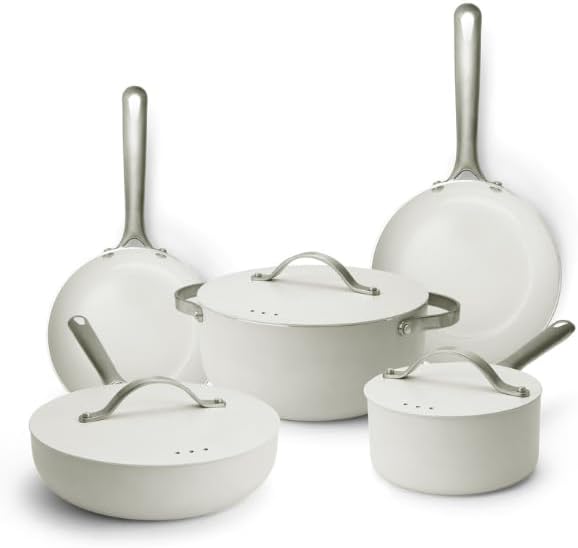
- Durable Nonstick: Diamond-reinforced ceramic, toxin-free, easy cleanup
- Even Heating: Heavy aluminum base, induction compatible, oven-safe to 400°F
- 8-Piece Set: Frying pans, saucepans, Dutch oven, sauté pan
- Safe & Convenient: Dishwasher safe, no seasoning required
- Stylish Design: Cannoli Cream finish, stay-cool handles
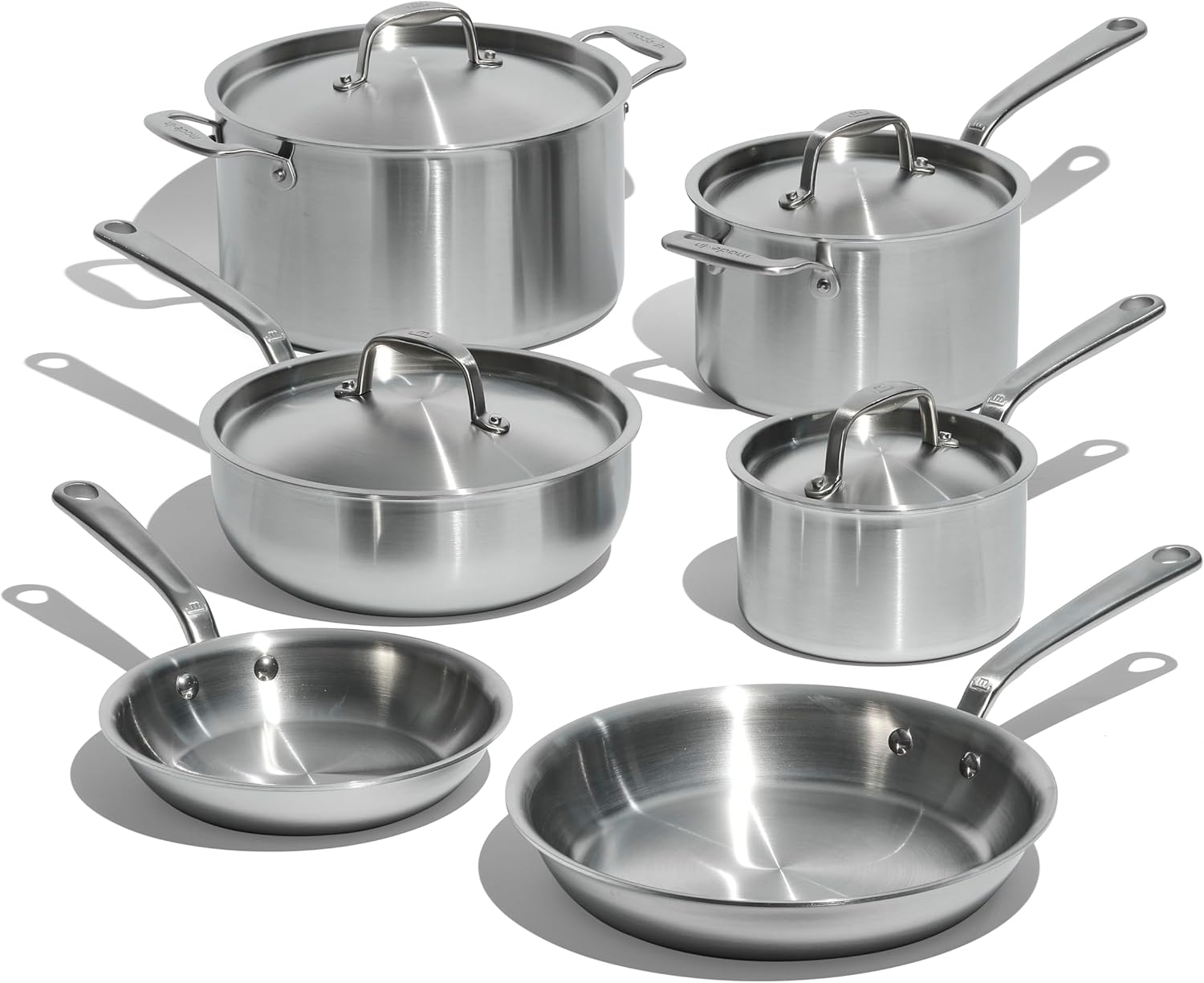
- Includes: 2 frying pans, stock pot, 2 saucepans, saucier (with lids)
- 5-Ply Construction: Even heat and durability
- Stay-Cool Handles: Riveted for strength
- Induction Compatible: Works on all cooktops
- Made in Italy: Professional quality
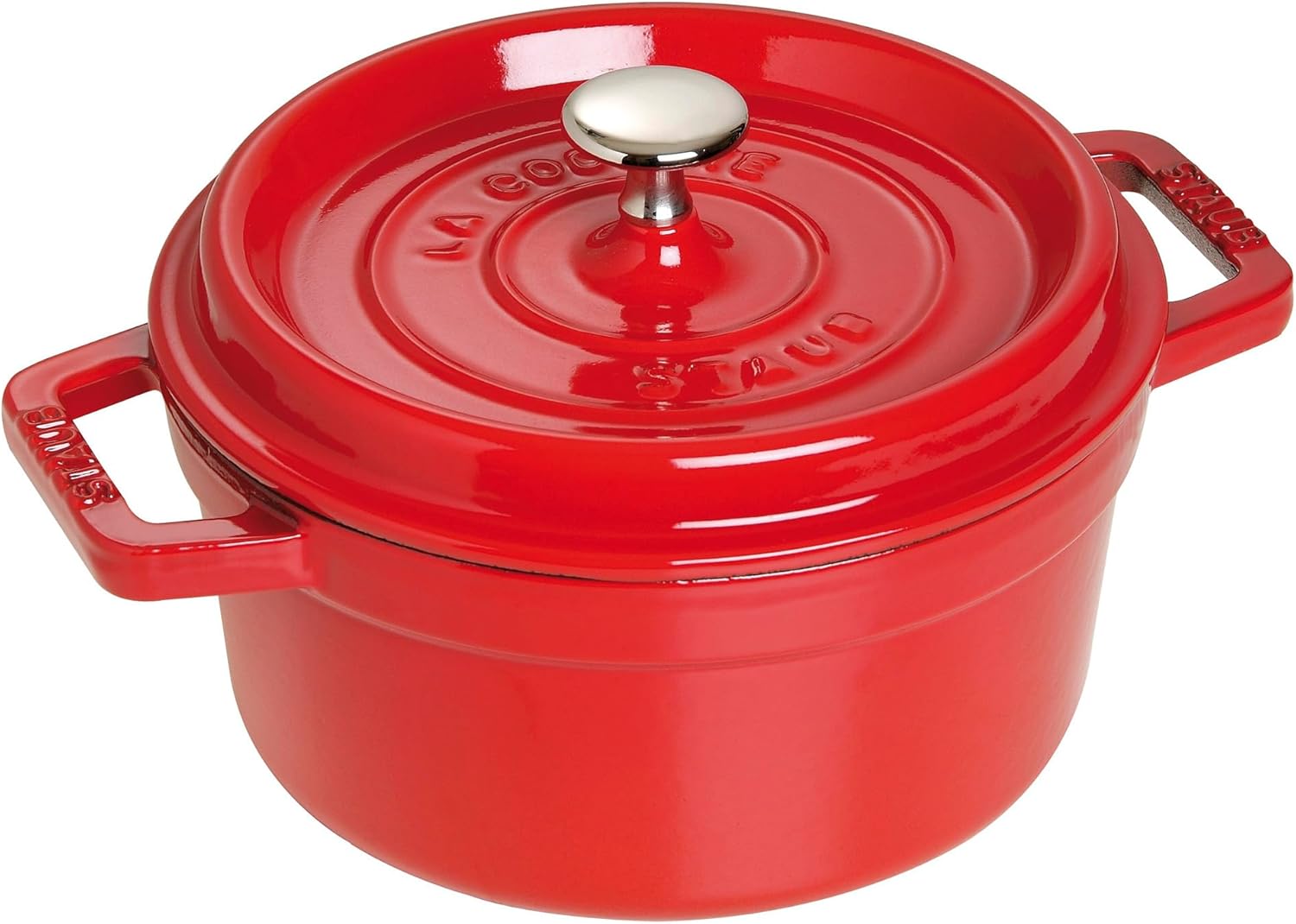
- Made in France: Enameled cast iron
- Self-Basting Lid: Retains moisture
- Oven Safe: Up to 900°F (lid 500°F)
- All Cooktops: Includes induction
- Matte Interior: Exceptional browning
- Care: Dishwasher safe, hand wash preferred

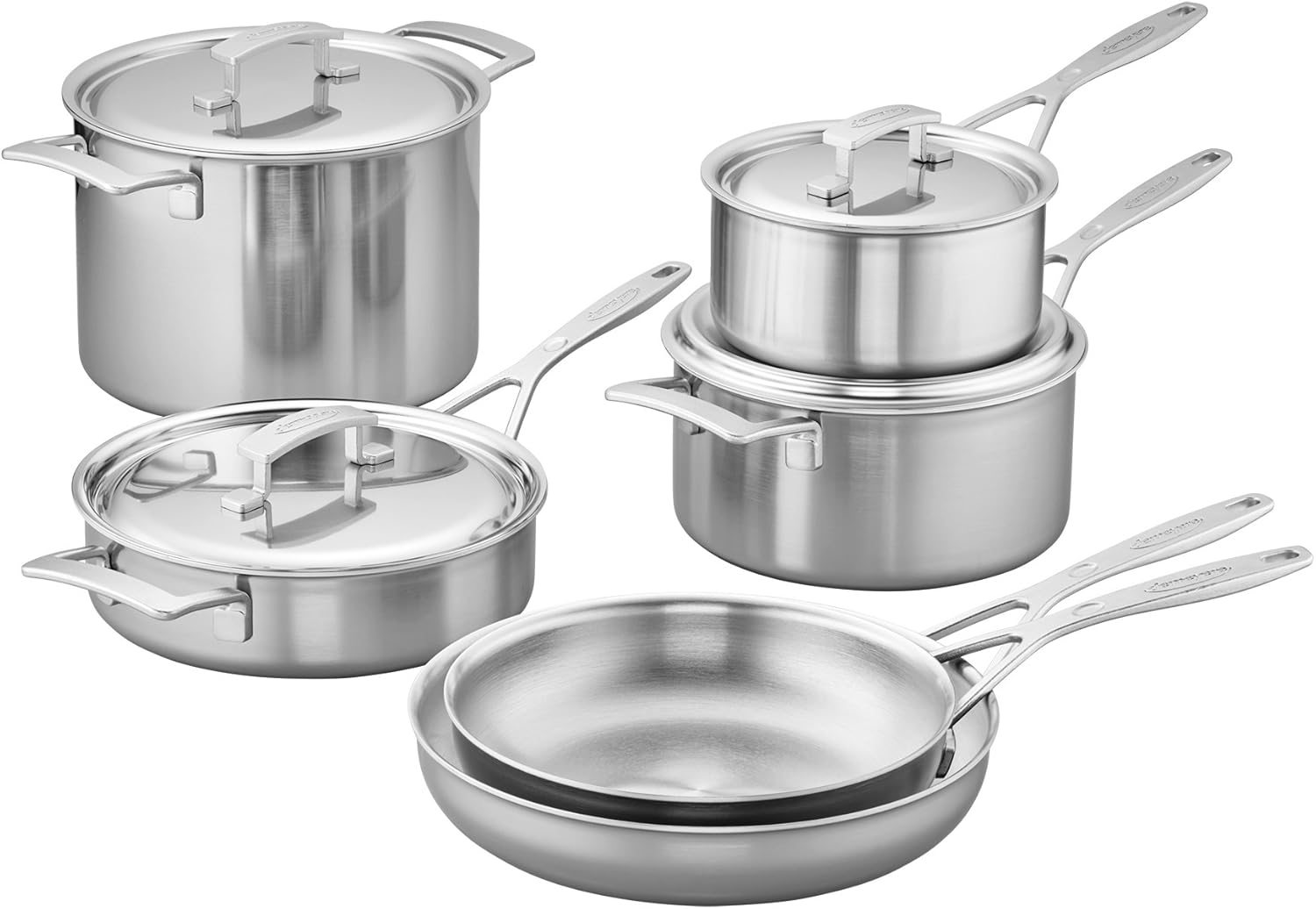
- Made in Belgium: Premium stainless steel cookware
- Set Includes: 2 fry pans, 2 saucepans with lids, sauté pan, stock pot with lid
- 5-Ply Construction: Even heat distribution
- Silvinox Finish: Resists stains, fingerprints, easy to clean
- Flat Base: Prevents warping
- Stay-Cool Handles: Welded for durability, hygienic design
Essential principles to remember:
- Safety comes first: Your family’s health justifies any investment
- Quality over quantity: Better to own fewer, safer pieces than many toxic ones
- Technique mastery: Learn to use your cookware properly for optimal results
- Maintenance excellence: Proper care protects and extends your investment
- Start immediately: Even replacing one toxic piece makes a meaningful difference
The brands and products featured in this comprehensive guide represent thousands of hours of rigorous testing, extensive research, and real-world performance validation. Every recommendation is based on verified safety, actual performance data, and long-term value assessment.
Your kitchen serves as the heart of your home. Transform it into a place where health, safety, and exceptional food unite harmoniously. The investment you make today in non-toxic cookware will generate returns in better health, improved cooking capabilities, and peace of mind for decades to come.
Take decisive action today. Your family’s health and wellbeing depend on it.
Choose wisely. Cook safely. Live healthier.


